


Introduction
Air Cargo Insurance Cost typically ranges from 0.3% to 0.6% of your shipment’s insured value, depending on factors such as cargo value, destination, commodity type, and the level of coverage selected. For example, insuring a shipment valued at USD 100,000 generally costs between USD 300 and USD 600. Most insurers also apply a minimum premium, typically ranging from USD 25 to USD 100, regardless of the shipment’s value.
Although air freight is one of the fastest and safest ways to transport goods, risks such as damage, theft, loss, and delays can still occur. Carrier liability often provides limited compensation, making air freight insurance an important safeguard for businesses shipping high-value or time-sensitive cargo.
In this guide, you’ll explore how Air Cargo Insurance Cost is calculated, the factors that affect air cargo insurance rates, and practical ways to reduce insurance costs while choosing the right coverage for your business.
What Is Air Cargo Insurance?
Air cargo insurance protects goods shipped by air against financial losses caused by damage, theft, loss, or other covered transit risks. It helps businesses recover the value of their shipments if something goes wrong, providing greater financial security than relying solely on carrier liability.
Although air freight is one of the fastest and safest shipping methods, unexpected events can still occur during handling or transit. This makes air freight insurance an important safeguard for businesses shipping high-value or time-sensitive cargo.

Unlike carrier liability, which provides limited compensation, air cargo insurance offers broader coverage based on the insured value of the shipment. Choosing the right policy helps businesses protect their cargo, reduce financial risk, and ship with greater confidence.
Types of Air Cargo Insurance
Choosing the right type of air cargo insurance helps balance protection and Air Cargo Insurance Cost. The most common coverage options include:
Type A – All‑Risk Insurance
- Most comprehensive coverage.
- Protects against damage, theft, loss, and other common risks.
- Requires approval for certain goods.
- Exclusions apply (e.g., poor packaging, inherent defects).
Type B – With Average Clauses (WA)
- Common in marine shipping but adapted for air freight.
- Covers partial losses, such as theft or undelivered cargo.
- Suitable for mid‑value shipments where full coverage isn’t necessary.
Type C – Free of Particular Average (FPA)
- Also called “Named Perils” coverage.
- Protects only against total loss.
- Often used for bulk cargo or lower‑value shipments.
Some providers also offer special add‑ons like war risk coverage or political unrest protection, which can increase your air freight insurance cost but provide extra security for sensitive routes.
What Factors Affect Air Cargo Insurance Cost?
Several factors determine your air cargo insurance cost. Insurers assess the level of risk associated with each shipment before calculating the premium. Understanding these factors can help businesses choose the right coverage and manage insurance costs more effectively.
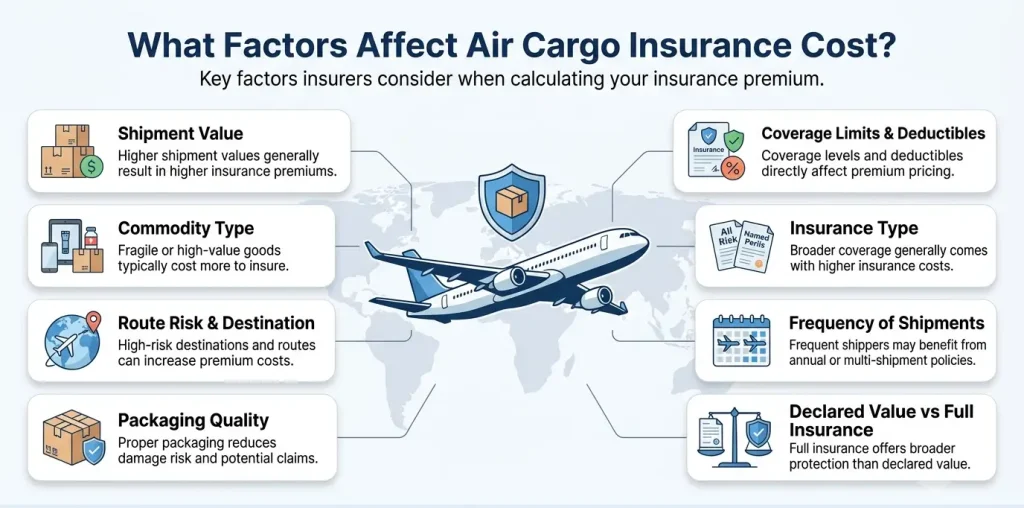
1):- Shipment Value
The premium increases with the value of your products. Insurance is calculated as a percentage of the insured value, so expensive electronics, machinery, or pharmaceuticals naturally cost more to insure.
2):- Commodity Type
Some goods are riskier to transport by air. Items like jewelry, fragile electronics, perishables, and high‑demand consumer products often come with higher air cargo insurance rates because insurers consider them more prone to theft or damage.
3):- Route Risk & Destination
Not all routes carry the same level of risk. Busy, well‑secured airports usually have lower premiums, while complex or high‑risk routes can increase the air freight insurance cost.
4):- Packaging Quality
Poor packaging raises the chance of damage. Insurers may increase your premium or even deny claims if packaging doesn’t meet safety standards.
5):- Coverage Limits & Deductibles
Higher coverage limits mean higher premiums, while higher deductibles lower premiums. Choosing the right balance helps manage your air freight cargo insurance expenses.
6):- Insurance Type
All‑risk coverage costs more than named‑perils insurance, but it provides broader protection. Businesses shipping high‑value items usually prefer all‑risk for peace of mind.
7):- Frequency of Shipments
One‑time policies often cost more per shipment. Regular shippers can reduce their overall air freight insurance cost with annual or bulk policies.
8):- Declared Value vs Full Insurance
Declaring a higher value with the carrier increases liability — but it’s not real insurance and often costs more in the long run. Full insurance is more affordable and offers complete protection.
What Are the Average Air Cargo Insurance Rates in 2026?
Understanding average market rates helps businesses estimate their Air Cargo Insurance Cost before shipping. While premiums vary depending on shipment value, commodity type, and route risk, most businesses fall within predictable ranges.
1):- Typical Market Rates
Most air freight shipments are insured at 0.3%–0.6% of the insured value. This range applies to general cargo such as apparel, consumer goods, and electronics.
2):- High‑Risk Cargo Rates
High‑risk or high‑value cargo — including jewelry, fragile electronics, pharmaceuticals, and perishables — may cost $2 or more per $100 of value. These items require extra protection and specialized handling, which raises the air freight insurance cost.
Practical Examples
- Electronics: Premiums average around 0.5% of insured value.
- Pharmaceuticals: Slightly higher due to temperature sensitivity and handling requirements.
- Refrigerated Seafood: A $500,000 shipment may require a premium of about $10,000.
These examples show how commodity type and risk directly influence your final air freight cargo insurance expense.
Comparison With Marine Cargo Insurance
Air cargo insurance is generally cheaper than marine cargo insurance, especially for high‑value goods. With quicker transit times and lower exposure to damage, the air cargo insurance cost tends to be more predictable and stable compared to ocean freight coverage.
How Air Cargo Insurance Cost Is Calculated
To understand your Air Cargo Insurance Cost, it’s important to know how insurers calculate premiums. Most providers follow a standard approach based on insured value and the level of risk associated with the shipment.
Standard Insurance Formula
Insurers calculate the insured value using this formula:
Insured Value = (Actual Value + Freight) + 10% Uplift
The 10% uplift accounts for unexpected expenses such as handling, documentation, or minor fluctuations in value.
Premium Calculation Per $100 Value
Once the insured value is set, insurers apply a premium rate — typically 0.3%–0.6% per $100 of value. Higher‑risk commodities receive higher ratings based on risk tables, which increases the air freight insurance cost.
Detailed Calculation Example
Here’s how insurers calculate premiums step by step:
Item | Amount (USD) | Explanation |
Actual Value | $125,000 | Value of goods being shipped |
Freight Cost | $3,000 | Cost of transporting cargo by air |
Total Value | $12,8000 | Actual Value + Freight Cost |
10% Uplift | $12,800 | Added buffer for handling & documentation |
Insured Value | $140,800 | Total Value + 10% uplift |
Premium Rate | 0.5% | Typical mid‑range market rate |
Estimated Premium | ≈ $704 | 0.5% of $140,800 |
This example shows how insurers determine your air cargo insurance rates. The final air freight insurance cost depends on commodity type, route risk, and insurer rating tables.
Commodity‑Based Rating Tables
Insurers classify goods into categories such as low risk, medium risk, and high risk. High‑risk cargo — including perishables, luxury goods, and fragile items — always results in a higher air freight cargo insurance premium.
Why Do Businesses Need Air Cargo Insurance?
Investing in air cargo insurance isn’t just a safety measure — it’s a smart business decision. Beyond protecting shipments, it lowers long‑term risks and allows companies to operate with greater confidence.
1):- Financial Protection Beyond Carrier Liability
Air cargo insurance provides coverage for eligible losses caused by damage, theft, or loss during transit. Unlike limited carrier liability, it helps protect the full value of your shipment.
2):- Faster Claims Settlement
Claims can be settled more efficiently when supported by documents such as the Air Waybill (AWB), proof of shipment value, and damage reports. Faster settlements help businesses recover losses with minimal disruption.
3):- Customer Confidence
Shipping insured goods reassures customers that their cargo is financially protected. This builds trust and strengthens long-term business relationships, especially for high-value or time-sensitive shipments.
4):- Compliance With International Standards
Proper insurance helps businesses meet industry regulations and shipping requirements. This minimizes legal issues and strengthens overall risk management.
5):- Competitive Advantage for Businesses
Offering insured shipments sets you apart from competitors. You can promise safe, secure, and worry‑free delivery — backed by real protection.
What Challenges Can Increase Air Cargo Insurance Cost?
Although air cargo insurance provides valuable financial protection, several factors can increase your Air Cargo Insurance Cost. Understanding these challenges can help businesses avoid unnecessary expenses and choose the right coverage.
1):- Hidden Fees
Some policies include administrative charges, policy fees, or additional surcharges that may not be obvious at first. Always review the policy terms carefully to understand the total insurance cost.
2):- International Shipping Regulations
International shipments must comply with regulations such as the Montreal Convention and carrier liability rules. Failing to meet these requirements can lead to coverage gaps or claim complications.
3):- High-Risk Cargo
Fragile, high-value, or perishable goods—such as electronics, pharmaceuticals, jewelry, and refrigerated products—typically attract higher premiums because they are more likely to be damaged or stolen during transit.
4):- High-Risk Shipping Routes
Shipping through destinations with higher security risks or limited infrastructure can increase air cargo insurance rates. Choosing safer routes, when possible, may help keep premiums under control.
How Can You Reduce Air Cargo Insurance Cost?
Reducing Air Cargo Insurance Cost doesn’t mean choosing less coverage. Instead, businesses can lower premiums by improving shipment safety, selecting the right policy, and minimizing transit risks. Here are some practical ways to save on air freight insurance costs.
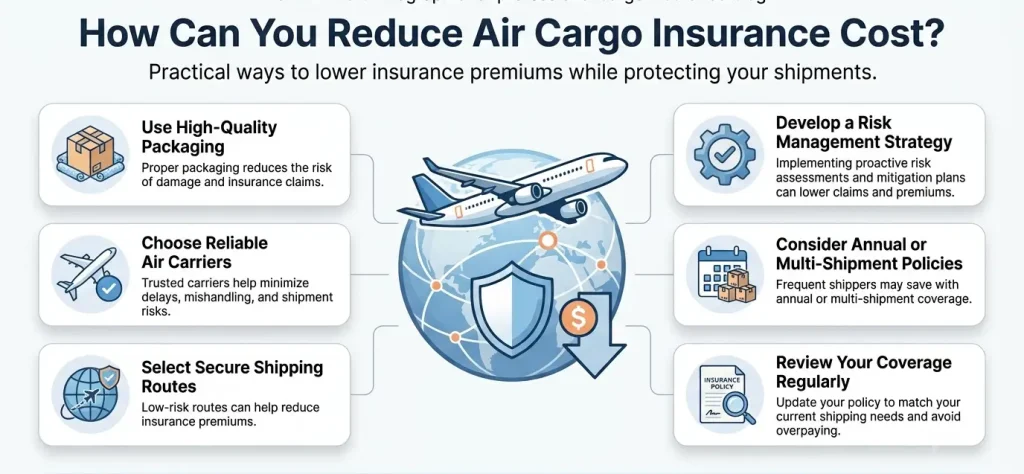
1):- Use High-Quality Packaging
Proper packaging reduces the risk of damage during transit, making your shipment less risky to insure. Well-protected cargo may also help prevent claim disputes.
2):- Choose Reliable Air Carriers
Shipping with experienced and reputable carriers can lower the likelihood of delays, mishandling, and cargo damage, which may help keep insurance premiums competitive.
3):- Select Secure Shipping Routes
Whenever possible, choose well-established routes and secure airports. Lower-risk destinations generally result in more affordable air cargo insurance rates.
4):- Consider Annual or Multi-Shipment Policies
If your business ships goods regularly, an annual or multi-shipment policy can be more cost-effective than purchasing insurance for each shipment separately.
5):- Review Your Coverage Regularly
As your shipping volume and cargo value change, review your air cargo insurance policy to ensure you have the right level of protection. This helps avoid paying for unnecessary coverage while keeping your shipments adequately insured.
How CargoInsurePro Helps Businesses Save
CargoInsurePro makes air cargo insurance simple, affordable, and reliable. Their solutions combine protection with efficiency, giving businesses peace of mind and helping them manage their overall air cargo insurance cost more effectively.
1):- Tailored Air Cargo Insurance
Customized plans for different shipment types ensure coverage fits your cargo’s value, risk profile, and route.
2):- Affordable Premiums
Competitive rates for both All‑Risk and Named Perils policies help businesses control costs without sacrificing protection.
3):- Fast Claim Processing With Tracking Integration
Integrated tracking data and AWB documentation speed up claim settlements, reducing downtime and financial uncertainty.
4):- Insurance Options Offered
By combining comprehensive insurance with smart air cargo tracking, CargoInsurePro ensures your shipments remain safe, compliant, and cost‑efficient — giving businesses a competitive edge in global trade.
Also Read: How Much Does Cargo Insurance Cost in 2025? A Complete Guide to Rates, Coverage & Savings



3 Responses