

Introduction
India’s trade economy is expanding rapidly, with thousands of shipments moving daily through ports, highways, and air routes. Whether you’re exporting textiles from Mumbai, importing machinery into Chennai, or transporting goods across inland routes, one fact remains—shipping always carries risks.
From unpredictable weather and natural disasters to theft, piracy, collisions, and handling errors, businesses face multiple challenges when moving cargo. That’s why understanding marine insurance policies in India has become essential for companies of every size.
A well-structured marine insurance policy safeguards cargo, ships, freight, and even third-party liabilities, ensuring your business stays protected no matter where your goods are headed. In this guide, we’ll break down the different types of marine insurance policies in India every business should know—so you can ship with confidence and secure your supply chain.
Key Takeaways
- Marine insurance policies in India protect cargo, ships, and freight from loss, damage, or theft.
- Liability, freight, marine cargo, and hull and machinery insurance are common varieties.
- Right coverage depends on cargo type, route, and transport mode.
- Ensures financial protection, compliance, and uninterrupted business operations.
What Is a Marine Insurance Policy?
A marine insurance policy is essentially a financial safety net for businesses that move goods across different routes. It protects your cargo, ships, and freight against risks that can occur while transporting them from one place to another.
Although the word “marine” suggests sea transport, modern marine insurance policies in India go far beyond that. Today, they cover shipments moving by sea, air, road, and rail, making them vital for almost every business involved in domestic and international trade.
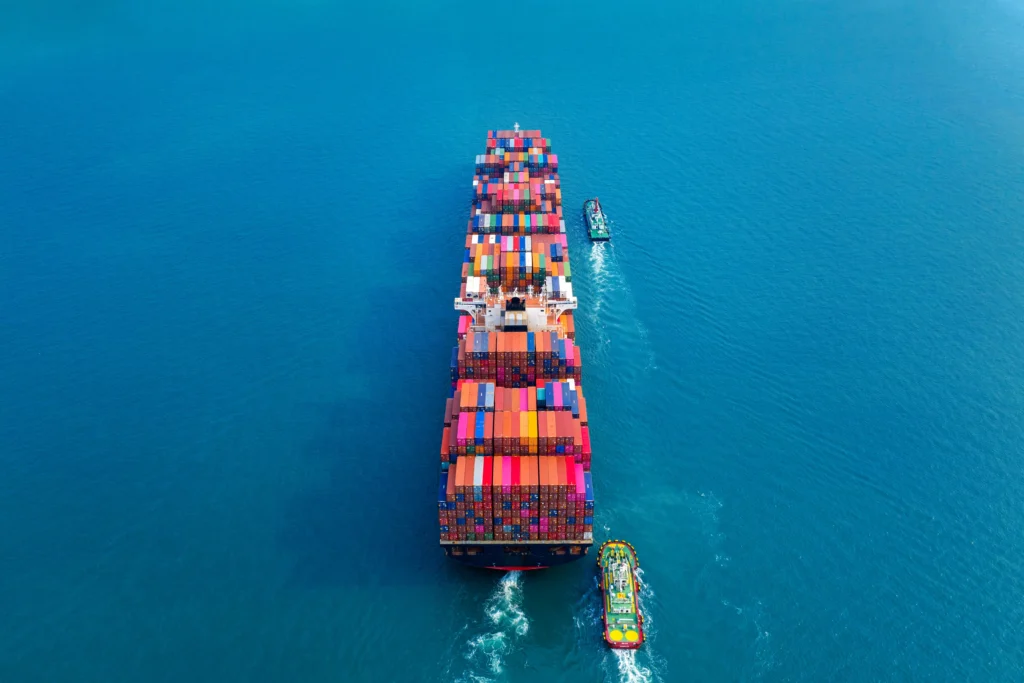
Think of it as a contract between you and the insurer: If something goes wrong during transit—such as damage, theft, fire, collision, or natural disasters—your marine insurance policy compensates you for the loss, helping your business recover quickly.
Scope of a Marine Insurance Policy
A standard marine cargo insurance policy in India can include coverage for:
- Imports and exports
- Inland transit across India
- Multimodal transport (sea, air, road, rail)
- High-value or sensitive cargo
- Fleet operations and vessel protection
Whether your shipments are domestic or international, marine insurance ensures your supply chain stays protected at every step.
Legal Framework in India
Marine insurance in India is governed by the Marine Insurance Act, 1963, which is modeled on the English Marine Insurance Act of 1906. This law defines key aspects such as
- What qualifies as an insurable interest
- How claims are processed
- Compliance requirements for businesses using marine insurance
Who Should Have a Marine Insurance Policy?
If your business involves moving, storing, or managing cargo, you need marine insurance. Common beneficiaries include:
- Exporters & importers
- Freight forwarders
- Logistics companies & 3PL providers
- Shipping companies & vessel owners
- Manufacturers transporting goods across India
- eCommerce businesses with regular shipments
Why Businesses in India Need Marine Insurance
India’s trade network is massive—stretching from bustling ports like Mumbai and Chennai to inland hubs connected by highways and rail. With so many shipments moving daily, the risks are just as diverse. Goods can be damaged by rough handling, delayed by accidents, or even lost due to theft or natural disasters. That’s where marine insurance policies in India step in.
A marine insurance policy acts as a shield, protecting businesses from financial losses that could otherwise disrupt operations. For exporters, importers, logistics providers, and even eCommerce sellers, it ensures that one unexpected incident doesn’t derail the entire supply chain.
Key Reasons Businesses Need Marine Insurance in India
1. Financial Protection Against Transit Risks
A marine insurance policy covers losses caused by damage, fire, theft, collisions, natural disasters, and other unexpected events. Whether your goods are moving by sea, air, road, or rail, marine insurance ensures your business doesn’t take the financial hit.
2. Strong Risk Management for Growing Businesses
With rising cargo volumes and complex logistics routes, risk management has become crucial. Marine insurance policies help businesses ship confidently, knowing their goods—and financial interests—are protected.
3. Compliance With Trade, Shipping & Banking Requirements
Many import–export contracts, port authorities, logistics providers, and even banks require valid marine cargo insurance. Having the right marine policy insurance keeps your business fully compliant with trade norms in India and abroad.
4. Ensures Business Continuity
No business wants to face downtime due to shipment delays or losses. Marine insurance provides quick compensation so your operations continue smoothly without major disruptions.
5. Complete Peace of Mind for Every Shipment
Whether you ship occasionally or handle hundreds of consignments a month, marine insurance gives you the peace of mind that your cargo is always protected—domestically and internationally.
Different types of marine insurance policies in India
Not all shipments face the same risks, and not all businesses need the same type of coverage. That’s why understanding the different types of marine insurance policies in India is essential. Whether you are an exporter, importer, logistics provider, or shipowner, there is a policy designed to protect your cargo, ships, freight, and even legal liabilities.
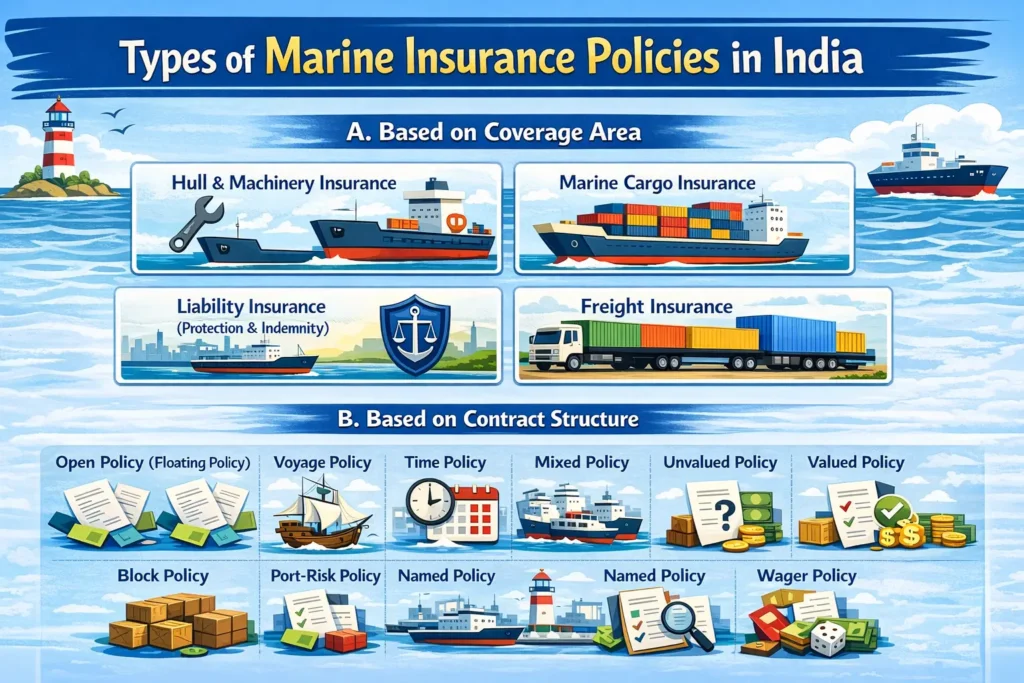
We can broadly classify these policies into two main categories: based on coverage area and based on contract structure.
A. Based on Coverage Area
1. Hull & Machinery Insurance
This insurance protects the vessel itself, including its structure, engines, and onboard machinery. If a ship faces damage due to collisions, storms, fire, or accidents during operations, hull & machinery insurance ensures that repair or replacement costs are covered. This is especially crucial for shipowners and shipping companies operating in risky maritime routes.
2. Marine Cargo Insurance
The most common marine insurance policy in India, marine cargo insurance safeguards goods in transit—whether by sea, air, or land. It protects your cargo from loss, theft, damage, or delays. Many policies also include third-party liability coverage, which is helpful if your cargo inadvertently causes damage to other property during transit. Exporters, importers, and freight forwarders rely heavily on this policy to protect high-value or sensitive shipments.
3. Liability Insurance (Protection & Indemnity)
Also known as P&I insurance, this policy protects shipping companies from legal liabilities arising from third-party claims. It covers situations such as injury to personnel, damage to other vessels, environmental pollution, and port accidents. Freight forwarders and shipowners often include this coverage to mitigate potential financial exposure.
4. Freight Insurance
Freight insurance is designed to cover the loss of freight revenue if goods are damaged, lost, or delayed during transit. For logistics providers and exporters, this ensures that even if cargo mishaps occur, the financial impact on transportation costs is minimized.
B. Based on Contract Structure
1. Open Policy (Floating Policy)
An open policy provides continuous coverage for multiple shipments over a defined period. It is ideal for businesses that ship regularly, as it eliminates the need to arrange insurance for every individual consignment.
2. Voyage Policy
This policy covers cargo for a specific journey or voyage only. It is commonly used for one-off or international shipments where coverage is needed for a single trip.
3. Time Policy
A time policy provides coverage for a fixed period, usually one year, regardless of the number of shipments within that timeframe. It is suitable for businesses that transport goods frequently over a year.
4. Mixed Policy
A mixed policy, as its name implies, blends elements of time and travel policies. It allows flexibility for businesses with both scheduled and occasional shipments.
5. Single Vessel Policy
This policy insures a single vessel against all risks it may face during a specific period or voyage.
6. Fleet Policy
A fleet policy is designed for companies operating multiple vessels, providing coverage for all ships under one policy. It simplifies management and ensures uniform protection across the fleet.
7. Unvalued Policy
In an unvalued policy, the value of the cargo is determined only at the time of a claim. This type of policy is useful when the exact shipment value may fluctuate.
8. Valued Policy
A valued policy sets a pre-agreed value of the cargo at the time of issuing the policy. This simplifies claim settlement and is widely used for high-value shipments.
9. Block Policy
Block policies provide comprehensive, all-risk coverage, often used for high-value goods such as jewelry, luxury items, or sensitive cargo. They offer broad protection across multiple shipments and routes.
10. Port-Risk Policy
This policy specifically covers ships while docked, undergoing repair, or in port. It is crucial for protecting assets during maintenance or loading/unloading operations.
11. Named Policy
Named policies insure specific vessels or cargo consignments explicitly mentioned in the contract. This ensures clarity and reduces ambiguity during claims.
12. Wager Policy
Rare and generally not enforceable, wager policies are issued without an insurable interest. They are mostly historical and not used in modern shipping insurance practices.
How to Choose the Right Marine Insurance Policy
Choosing the right marine insurance policy in India can feel overwhelming because of the many options available. But once you understand your business needs, cargo type, and risk exposure, the process becomes much simpler. The goal is to keep your goods, ships, and freight fully protected—without overspending on unnecessary coverage.
Here’s a practical guide to help businesses make smarter choices:
1. Assess the Type and Value of Your Cargo
- Fragile, high-value, or perishable goods—like electronics, pharmaceuticals, or luxury items—require comprehensive coverage.
- Policies such as marine cargo insurance or block policies provide maximum protection.
- Lower-value goods may be adequately covered under simpler or named-perils policies.
2. Consider the Destination and Route
Shipping routes directly impact risk:
- Coastal or international sea routes → piracy, rough seas, port congestion.
- Inland routes → road accidents, theft, floods. Choosing a policy tailored to your route ensures protection against the most likely hazards, both within India and internationally.
3. Match the Policy to the Mode of Transport
Modern marine insurance policies in India cover more than just sea freight:
- Sea freight insurance: Risks include storms, piracy, and port handling.
- Air freight insurance: High-value, time-sensitive goods need fast and reliable protection.
- Land transport insurance: Covers accidents, theft, and natural hazards during road or rail transit. Selecting a policy aligned with your shipment mode ensures the right level of coverage.
4. Check the Provider’s Reputation
Partnering with a trusted insurer like CargoInsurePro makes a big difference. Reliable providers offer:
- Clear policy terms and guidance
- Efficient claims processing
- Tailored coverage options for Indian businesses A strong provider ensures your marine insurance policy delivers when you need it most.
5. Understand Policy Terms and Exclusions
Always read the fine print. Common exclusions include:
- War, terrorism, or political unrest
- Poor packaging or inherent defects in cargo
- Delays not caused by physical damage (e.g., customs hold-ups) Knowing what is and isn’t covered helps you avoid surprises and ensures you select the most suitable marine insurance policy in India.
6. Balance Cost with Coverage Needs
Premiums vary depending on cargo type, value, route, and transport mode. While it’s tempting to choose the cheapest option, underinsurance can lead to major losses. Evaluate risk, coverage, and cost carefully to get optimal protection without overspending.
Also Read: How Much Does Marine Cargo Insurance Cost in 2026? Average Rates & Coverage Explained
Conclusion
In today’s fast‑moving trade environment, protecting your shipments is no longer optional—it’s essential. With so many risks involved in transporting goods across sea, air, road, and rail, having the right marine insurance policies in India ensures your business stays secure and resilient.
From hull and cargo insurance to liability, freight, and specialized policies like voyage or open cover, each option is designed to safeguard different aspects of your supply chain. The key is to match your policy to your cargo type, transport mode, and risk exposure so you’re never left vulnerable.
Whether you’re a small exporter, a growing eCommerce brand, or a large logistics provider, marine insurance offers peace of mind, financial protection, and compliance with trade regulations.
By choosing a trusted partner like CargoInsurePro, you can access tailored coverage, expert guidance, and fast claims support—helping you ship with confidence and focus on growing your business.


2 Responses