

Introduction
You can buy cargo insurance online by providing your shipment details, choosing suitable coverage, reviewing the policy terms, and completing the purchase before transit begins. The right coverage depends on factors such as cargo value, type of goods, shipping route, transport mode, and the risks involved.
International shipments can face risks such as damage, theft, loss, and other covered transit-related events. Cargo insurance can provide financial protection against covered losses, subject to the policy’s coverage limits, conditions, and exclusions.
This guide explains how to buy cargo insurance online, what information you need, how coverage and costs are determined, what to check before purchasing, and common mistakes to avoid.
What Is Cargo Insurance and Why Do You Need It?
Cargo insurance protects goods against financial loss from covered risks during transit. Depending on the policy, it may provide protection for events such as accidental damage, theft, loss, or other specified transit risks. The exact protection depends on the policy wording, limits, exclusions, and conditions.
This is particularly important for international shipments because goods may pass through several stages before reaching the buyer. A shipment can be loaded at the origin, transported by sea or air, handled at a port or warehouse, and moved by road to its final destination.

Why Is Cargo Insurance Important for International Shipping?
Carrier liability does not necessarily provide full compensation for the commercial value of your goods. Liability can be limited by the carrier’s terms, applicable rules, and the circumstances of the loss.
For example: A Singapore business imports machinery worth $60,000 from China. If the machinery is damaged during transit, recovering the full commercial value from the carrier may not always be possible. A suitable cargo insurance policy can provide additional financial protection for covered losses, subject to its terms.
Cargo insurance can therefore help businesses manage the financial impact of unexpected shipment problems rather than absorbing the entire loss themselves.
What Risks Can Cargo Insurance Cover?
Coverage varies between policies, but international cargo insurance may protect against covered risks such as:
- Accidental damage during transit
- Theft
- Loss of goods
- Vehicle, vessel, or aircraft accidents
- Certain natural events
- Loading and unloading damage
- Other risks specifically included in the policy
Not every policy covers every risk. Before you buy cargo insurance online, check the coverage conditions and exclusions to understand exactly what protection you are purchasing.
Why Is This Important for Businesses?
The financial impact of a shipment loss can extend beyond the value of the goods. A damaged shipment may also result in replacement costs, delayed customer orders, inventory shortages, and disruption to normal operations.
For example: If an e-commerce company ships 300 products internationally and several packages are lost, the business may need to replace the affected orders while also managing refunds and customer complaints. Appropriate insurance can help reduce the financial exposure from covered losses.
For businesses that regularly import or export goods, cargo insurance for international shipping can be an important part of managing transportation risk.
By securing international cargo insurance, businesses can better protect their shipments, improve financial stability, and reduce the uncertainty that comes with global trade.
Who Should Buy Cargo Insurance Online?
Any business that ships goods domestically or internationally can benefit from cargo insurance. Unexpected events such as damage, theft, loss, or transit delays can result in financial losses and supply chain disruptions. That’s why many businesses choose to buy cargo insurance online before their shipments are transported.
1):- Importers and Exporters
Importers and exporters often invest heavily in inventory before goods reach their destination. Cargo insurance helps protect these shipments against losses that may occur during transit.
2):- Freight Forwarders and Logistics Companies
Freight forwarders manage shipments across multiple transportation networks. Cargo insurance coverage provides additional protection and helps reduce the financial risks associated with moving goods internationally.
3):- E-commerce Businesses
Online retailers rely on timely deliveries and customer satisfaction. A cargo insurance policy can help cover losses caused by damaged, lost, or stolen shipments.
4):- Manufacturers and Distributors
Manufacturers and distributors regularly transport raw materials and finished products. International cargo insurance helps protect these goods throughout the supply chain and supports business continuity.
If your business depends on shipping goods by sea, air, or land, cargo insurance for international shipping can be an important part of managing transportation risks.
Types of Cargo Insurance Available for International Shipping
The right cargo insurance coverage depends on how your goods are transported and the level of protection your business requires. Understanding the different types of cargo insurance can help you choose a policy that matches your shipping needs.
1):- Marine Cargo Insurance
Marine cargo insurance protects goods transported by sea. It covers shipments against risks such as damage, loss, theft, and certain weather-related incidents that may occur during ocean transit.
This is one of the most common types of international cargo insurance used by importers, exporters, and trading companies.
2):- Air Freight Insurance
Air freight insurance covers goods shipped by air. It is often used for high-value, time-sensitive, or urgent shipments that require faster delivery.
This coverage helps protect businesses from financial losses if cargo is damaged or lost during air transportation.
3):- Land Transport Insurance
Land transport insurance protects goods transported by road or rail. It is appropriate for both domestic and international shipments that are transported by train or truck.
Businesses that regularly move products between warehouses, distribution centers, and customers often use this type of coverage.
4):- Parcel Insurance
Parcel insurance is designed for smaller shipments and individual packages. It is commonly used by e-commerce businesses and retailers that ship products directly to customers.
Coverage typically helps protect against loss, theft, or damage during delivery.
5):- Freight Forwarder Liability Insurance
Freight forwarder liability insurance helps protect freight forwarders and logistics providers against liabilities that may arise while handling customer shipments.
This coverage can be especially valuable for businesses responsible for managing international transportation and supply chain operations.
What Information Do You Need to Buy Cargo Insurance Online?
To buy cargo insurance online, you usually need basic information about the shipment, the goods, and the journey. Providing accurate details helps the insurer assess the risk and determine suitable coverage and pricing.
Before requesting a quote, prepare the following information:
Information | Why It Matters |
Cargo description | Identifies the type and nature of goods being shipped. |
Cargo value | Helps determine the amount of insurance required and may affect the premium. |
Origin and destination | Helps assess the transportation route and associated risks. |
Transport mode | Determines whether sea, air, land, or another form of coverage is appropriate. |
Shipping date | Helps establish when coverage may need to begin. |
Packaging details | May be relevant when assessing damage risks and claims. |
Invoice or commercial documents | May be required to verify the value and nature of the shipment. |
Coverage requirements | Helps determine the level and type of protection needed. |
What Cargo Details Should You Provide?
Be as specific as possible when describing your goods. Instead of simply stating “products,” provide a clear description of the cargo, such as electronics, machinery, clothing, pharmaceuticals, or food products.
The value should also be accurate. Underinsuring cargo to reduce the premium can leave a business with insufficient protection if a covered loss occurs.
What Route Information Is Needed?
Provide the shipment’s starting point, destination, and relevant transit information. A shipment from China to Singapore, for example, may involve ocean transportation, port handling, warehousing, and local delivery.
Understanding the complete journey helps ensure that the cargo insurance coverage is appropriate for the shipment’s actual movement.
Why Does Accurate Information Matter?
Insurance pricing and coverage depend on the information provided about the shipment. If important details are incomplete or inaccurate, the resulting quote or policy may not reflect the actual risk.
For example, if a shipment is declared as general merchandise but actually contains high-value electronic equipment, the difference could become important when assessing coverage or a claim.
Before you buy cargo insurance online, gather accurate shipment information and review it carefully. This can make the quotation and purchasing process smoother and help you select coverage that matches your actual shipping needs.
How to Buy Cargo Insurance Online: Step-by-Step Guide
You can buy cargo insurance online by preparing your shipment details, selecting suitable coverage, comparing policy terms, requesting a quote, and completing the purchase before transit begins. The process is usually straightforward, but reviewing the policy carefully is important before you make a payment.
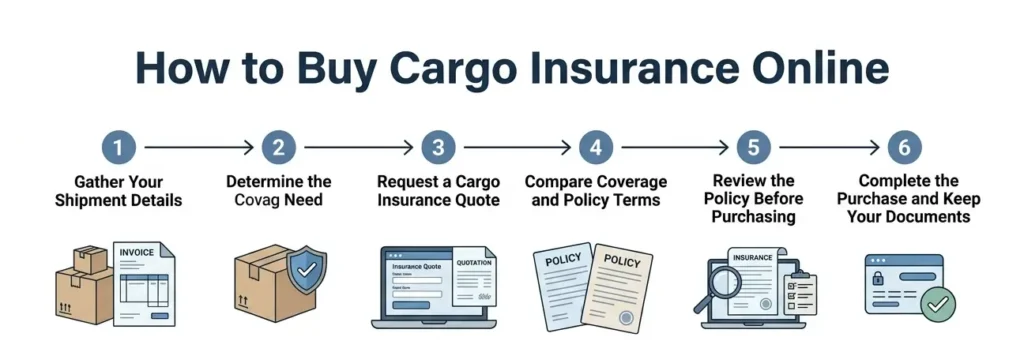
Step 1: Gather Your Shipment Details
Start with accurate information about the shipment. Have the following details ready:
- Type and description of goods
- Shipment value
- Origin and destination
- Shipping date
- Transport mode
- Packaging information
- Invoice or other relevant documents, if required
Accurate information helps the insurer assess the shipment and provide a more appropriate quote.
Step 2: Determine the Coverage You Need
Consider what could cause the greatest financial impact if something goes wrong.
For example, a business shipping machinery worth $100,000 may need to pay closer attention to coverage limits than a retailer sending lower-value parcels.
Consider:
- Cargo value
- Type of goods
- Transport mode
- Shipping route
- Potential transit risks
- Required coverage limits
- Policy exclusions
The objective is not simply to find the cheapest online cargo insurance option. It is to find coverage that matches the actual risk of the shipment.
Step 3: Request a Cargo Insurance Quote
Submit your shipment information through the insurer’s online quotation process. The information provided may be used to assess the risk and calculate the premium.
The cargo insurance online cost can vary depending on the value and type of goods, route, transport method, coverage selected, and other underwriting factors.
If you are comparing multiple options, make sure you compare policies on similar coverage terms rather than comparing premiums alone.
Step 4: Compare Coverage and Policy Terms
Before choosing a policy, compare more than the quoted price.
Check:
- Coverage limits
- Covered risks
- Exclusions
- Deductibles
- Geographic scope
- Policy conditions
- Claims requirements
A lower premium may not provide the same level of protection as a broader policy.
Step 5: Review the Policy Before Purchasing
Read the policy wording carefully before completing the purchase. Confirm that the insured value, cargo description, route, coverage period, and other important details are correct.
Pay particular attention to exclusions and conditions that could affect a future claim.
If something is unclear, ask the insurer for clarification before purchasing the policy.
Step 6: Complete the Purchase and Keep Your Documents
Once you are satisfied with the terms, complete the purchase through the online process. Depending on the provider and shipment, policy documents or a certificate of insurance may then be issued digitally.
Keep the policy, certificate, invoice, shipping documents, and other relevant records in an accessible location.
When Should You Buy Cargo Insurance?
Buy cargo insurance before the shipment begins whenever possible. Waiting until goods are already in transit may restrict your available options or affect whether coverage can be arranged.
For international shipments, arranging insurance early also gives you time to check the policy terms and correct any inaccurate shipment information before the goods leave the origin.
What Should You Check Before You Buy Cargo Insurance Online?
Before you buy cargo insurance online, it’s important to understand a few key factors that directly affect your coverage, cost, and claim experience. Choosing the right policy is not just about price—it’s about how well your shipment is protected.
1):- Cargo Value and Type
The value and nature of your goods play a major role in deciding the right coverage. High-value or fragile items such as electronics, machinery, or pharmaceuticals usually require broader protection under a cargo insurance policy.
2):- Shipping Route and Destination Risks
Some routes carry higher risks due to weather conditions, handling frequency, or regional issues. International cargo insurance should always consider the origin, transit points, and final destination of the shipment.
3):- Coverage Scope and Exclusions
Not all risks are covered under every policy. Always check what is included and excluded in your cargo insurance coverage to avoid surprises during a claim.
4):- Claims Support and Processing Time
A smooth claims process is just as important as coverage itself. Faster claim support helps businesses recover losses quickly and continue operations without major disruptions.
5):- Insurance Provider Reputation
Choose a provider with experience in cargo insurance for international shipping and a strong track record in handling claims efficiently and transparently.
The best policy is not necessarily the cheapest one. It is the policy that provides suitable protection for the specific shipment and risks you are trying to manage.
Benefits of Buying Cargo Insurance Online
Buying cargo insurance online has become the preferred choice for many importers, exporters, and logistics companies because it is faster, simpler, and more flexible than traditional methods.
1):- Faster Policy Issuance
When you buy cargo insurance online, you can get quotes and purchase coverage within minutes. This helps businesses secure protection quickly before shipments leave the warehouse.
2):- Easy Quote Comparison
Online platforms make it easy to compare different cargo insurance options side by side. Businesses can evaluate coverage limits, exclusions, and pricing before selecting a policy.
3):- Instant Documentation
Once the policy is purchased, digital certificates and documents are usually issued immediately. This is especially useful for customs clearance and shipment verification.
4):- Global Coverage Options
Online cargo insurance providers often offer international cargo insurance that covers shipments across multiple countries and transportation modes, including sea, air, and land.
5):- Better Risk Management
Cargo insurance helps businesses reduce financial uncertainty caused by damage, theft, or loss during transit. It ensures smoother operations and stronger supply chain stability.
In short, buying cargo insurance online allows businesses to protect shipments efficiently while saving time and improving decision-making.
Common Mistakes to Avoid When Buying Cargo Insurance
When you buy cargo insurance online, choosing the wrong policy or missing key details can lead to unexpected financial loss during claims. Understanding these common mistakes helps ensure better protection for your shipments.
1):- Underinsuring Cargo Value
One of the most common mistakes is declaring a lower cargo value to reduce premium costs. If the insured value is less than the actual shipment value, the compensation during a claim may not fully cover your loss.
2):- Ignoring Policy Exclusions
Every cargo insurance policy has exclusions. Failing to review them can result in denied claims if the damaged or lost goods fall outside the coverage terms.
3):- Choosing Coverage Based Only on Price
Selecting the cheapest option may seem cost-effective, but it often comes with limited protection. It’s important to evaluate cargo insurance coverage, not just cost, before making a decision.
4):- Delaying Insurance Until After Shipment Departure
Cargo insurance should always be arranged before the shipment begins its journey. Waiting too long can limit coverage options or make your cargo ineligible for protection.
Avoiding these mistakes ensures that your cargo insurance for international shipping provides reliable financial protection when you need it most.
Also Read: What to Do If Your Cargo Insurance Claim in Singapore Is Rejected


2 Responses