


Introduction
Parcel insurance helps protect the value of a shipment if it is lost, stolen, or damaged while in transit. Unlike basic carrier liability, which may have limits on how much you can recover, parcel insurance coverage can provide additional financial protection based on the terms and value of the policy.
This protection can be especially useful when shipping expensive electronics, fragile products, customer orders, or other valuable goods. It can also be helpful for international shipments, where parcels may pass through several carriers, facilities, and customs checkpoints before reaching their destination.
For businesses, a single lost or damaged package can mean more than the cost of the product. It may also lead to refunds, replacement costs, shipping expenses, and an unhappy customer.
In this guide, we’ll explain what is parcel insurance, how it works, what it covers, how it differs from carrier liability, what it may cost, and when buying coverage makes sense.
What Is Parcel Insurance?
Parcel insurance is optional coverage that protects the financial value of a package against covered events such as loss, theft, or damage during transit. If a covered incident occurs, the insurer may reimburse the shipper according to the policy terms, coverage limit, and declared or insured value of the parcel.
When you purchase parcel insurance, you typically provide details about the shipment and its value. If the parcel is lost or damaged during the covered transit period, you can submit a claim with supporting documents such as proof of shipment, tracking information, and evidence of the loss or damage.

Who Can Benefit From Parcel Insurance?
Parcel insurance can be useful for:
- E-commerce sellers shipping customer orders
- Businesses and SMEs sending products, samples, or important items
- Logistics companies handling large volumes of parcels
- Individuals sending valuable or fragile goods
For example, an online seller ships a $2,000 laptop to a customer. If the laptop is damaged during covered transit, parcel insurance may help recover the insured loss, subject to the policy’s terms and exclusions.
Is Parcel Insurance the Same as Carrier Liability?
No. Parcel insurance and carrier liability are different types of protection. Carrier liability is the carrier’s responsibility under its service terms or applicable rules and may have limits. Parcel insurance is an optional policy designed to provide additional financial protection for covered shipment risks.
This difference is important when the value of your parcel is significantly higher than the carrier’s applicable liability limit.
Why Is Parcel Insurance Important for Safe Shipments?
Parcel insurance matters because a lost, stolen, or damaged shipment can create a financial loss that may be much higher than the cost of coverage. This is especially important when the carrier’s standard liability does not fully cover the value of the goods.
What Can Go Wrong During Parcel Delivery?
Packages can face several risks as they move through warehouses, vehicles, sorting facilities, and delivery networks, including:
- Loss: A parcel may go missing during transit.
- Damage: Items can be broken, crushed, or otherwise damaged during handling.
- Theft: A shipment may be stolen while in transit or during delivery.
- Misdelivery: A parcel may be delivered to the wrong location or recipient.
These risks can affect both individuals and businesses. For an e-commerce seller, replacing a damaged order can mean paying for the product, a replacement shipment, and potentially a customer refund.
How Does Parcel Insurance Reduce Financial Risk?
Parcel insurance provides an additional financial safety net for covered losses. Instead of absorbing the entire value of an eligible shipment yourself, you can submit a claim and potentially receive compensation according to the policy terms and coverage limit.
For example: An online business ships 300 parcels in a month, each worth $200. If 2% of those shipments are lost or damaged, 6 parcels are affected, putting $1,200 in product value at risk. Appropriate insurance can help reduce the financial impact of covered losses.
When Is Parcel Insurance Especially Useful?
Parcel insurance is particularly worth considering when:
- You are shipping high-value or fragile goods, such as electronics, jewelry, or artwork.
- You are fulfilling international orders that involve longer routes and multiple handling points.
- You ship during peak seasons, when higher parcel volumes can increase operational pressure.
- Your shipment value is significantly higher than the carrier’s applicable liability limit.
The right coverage does not eliminate shipping risks, but it can help make the financial consequences of covered losses more manageable.
What Does Parcel Insurance Cover?
Parcel insurance coverage typically protects shipments against covered events such as loss, accidental damage, and theft during transit. The exact protection depends on the insurer, type of goods, destination, and policy terms.
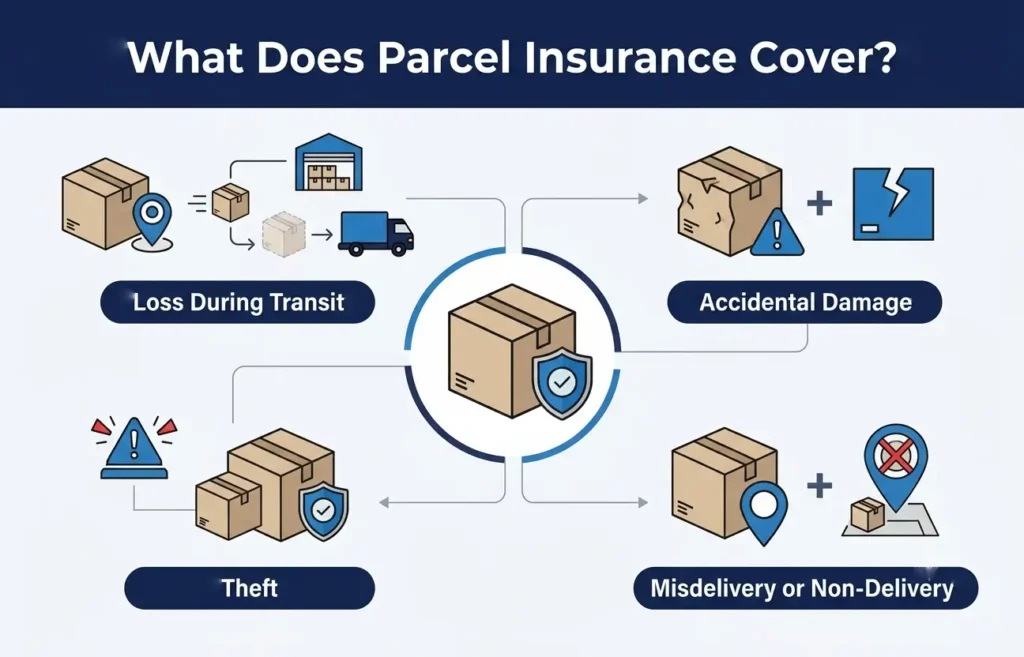
Here are the most common risks covered by parcel protection insurance:
1. Loss During Transit
If a parcel goes missing while being transported, parcel insurance may reimburse the shipper for the covered value of the goods. This can be particularly useful when the shipment contains expensive products or customer orders.
2. Accidental Damage
Packages can be dropped, crushed, or mishandled during sorting and transportation. If the resulting damage is covered by the policy, parcel delivery insurance can help compensate for the eligible loss.
For example, a business ships a $1,500 electronic device and it arrives with significant physical damage. If the incident falls within the policy’s covered risks, the shipper can submit a claim for the insured loss.
3. Theft
A parcel can be stolen at different points in the delivery process. Depending on the policy, parcel insurance coverage may provide compensation when a shipment is stolen during the covered transit period.
4. Misdelivery or Non-Delivery
Some policies may provide protection when a parcel is incorrectly delivered or cannot be delivered to the intended recipient. However, the specific conditions for misdelivery claims vary by provider, so the policy should be checked before shipping.
What Does the Coverage Depend On?
Not every shipment automatically receives the same level of protection. Your parcel insurance coverage may depend on:
- The declared or insured value of the shipment
- Type and condition of the goods
- Origin and destination
- Shipping method
- Coverage limits
- Policy exclusions
- Required packaging standards
- Documentation and claim requirements
For this reason, don’t choose parcel shipping insurance based only on the advertised price. Check what risks are actually covered and how much you can recover if a claim is approved.
What Does Parcel Insurance Not Cover?
Parcel insurance does not automatically cover every type of loss or shipping problem. Coverage depends on the policy, and exclusions can apply to the goods, packaging, shipping conditions, or circumstances of the loss.
Common exclusions may include:
1. Prohibited or Restricted Items
Certain goods may not be eligible for parcel insurance coverage. These can include prohibited, illegal, or restricted items, depending on the insurer and destination.
2. Poor or Inadequate Packaging
If an item is damaged because it was not packed properly, the insurer may reject the claim. Following the provider’s packaging requirements is therefore important when using parcel protection insurance.
3. Delivery Delays
Parcel insurance generally focuses on physical loss or damage rather than ordinary delivery delays. Weather, traffic, customs procedures, or operational delays may not qualify for compensation unless the policy specifically provides such protection.
4. Coverage Above the Policy Limit
Insurance only protects up to the applicable coverage limit. If you ship an item worth $10,000 but the policy only covers $5,000, you may not be able to recover the entire value of the shipment.
5. Incorrect Shipment Information
Incorrect addresses, inaccurate declared values, or incomplete shipment details can create problems when filing a claim. Always provide accurate information when purchasing parcel delivery insurance.
How Can You Avoid Coverage Problems?
Before buying parcel shipping insurance, check the policy for:
- Covered and excluded goods
- Maximum coverage limits
- Packaging requirements
- Eligible destinations
- Claim deadlines
- Required documentation
- Conditions for loss, theft, or damage
Understanding these terms before shipping can help you choose appropriate parcel insurance coverage and avoid unexpected problems during the claims process.
What Are the Different Types of Parcel Insurance?
Parcel insurance can be arranged in different ways depending on the carrier, shipment value, destination, and level of protection needed. The main types include:
1. Carrier-Provided Insurance or Liability
Many shipping carriers provide basic liability or declared-value protection under certain conditions. However, this is not always the same as full parcel insurance coverage.
Carrier protection may have limits, exclusions, and requirements for proving loss or damage. If your parcel is worth more than the carrier’s liability limit, additional parcel delivery insurance may be needed.
2. Third-Party Parcel Insurance
Third-party insurers provide parcel protection insurance separately from the shipping carrier. These policies may offer broader coverage for loss, theft, or damage and can be useful for businesses shipping high-value goods.
Coverage, pricing, claim procedures, and limits vary by provider, so compare the policy terms before purchasing.
3. On-Demand Parcel Insurance
On-demand insurance parcel delivery coverage can be purchased for individual shipments instead of covering every parcel sent by a business.
This option can be useful when only certain shipments need extra protection, such as electronics, artwork, jewelry, or other high-value products.
4. International Parcel Insurance
International shipments often pass through multiple handling points and may face longer transit routes. International parcel insurance can provide additional financial protection against covered loss, theft, or damage during transit.
Coverage depends on the destination, goods being shipped, policy limits, and applicable exclusions.
Which Type of Parcel Insurance Should You Choose?
The right option depends on the shipment rather than simply the parcel insurance cost. Before buying coverage, compare:
- Shipment value and coverage limit
- Loss, damage, and theft protection
- Domestic or international coverage
- Excluded goods and conditions
- Claim requirements and timelines
- Premium or parcel insurance cost
For example, a business shipping a $5,000 camera may need more protection than a business sending low-value apparel. In this case, relying only on basic carrier liability could leave part of the shipment value uninsured.
How Does Parcel Insurance Work?
Parcel insurance works by providing financial protection for a shipment against risks covered by the policy. You select coverage, declare the parcel’s value, ship the package, and file a claim if a covered loss occurs.
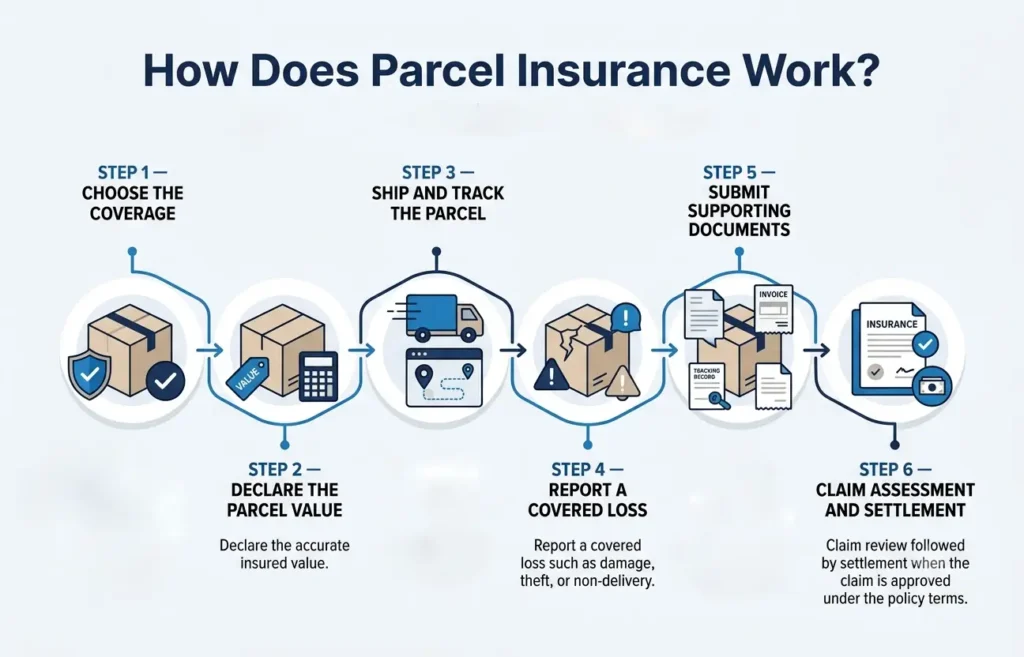
Step 1: Choose the Coverage
Start by deciding how much protection your shipment needs. Consider the parcel’s value, contents, destination, and shipping method. Check the policy limits and exclusions before purchasing coverage.
Step 2: Declare the Parcel Value
You usually need to provide the value of the goods when arranging coverage. Accurate valuation is important because it can affect the available coverage and potential claim settlement.
For example, if an e-commerce seller ships a product worth $2,500, the declared value should accurately reflect the shipment’s insured value rather than an artificially lower amount.
Step 3: Ship and Track the Parcel
Once coverage is arranged, ship the parcel according to the policy requirements. Keep the tracking number and shipping records because they may be needed if you have to make a parcel insurance claim.
Step 4: Report a Covered Loss
If the package is lost, damaged, stolen, or affected by another covered event, report the incident according to the insurer’s claim procedure. Do not assume every shipping problem qualifies for reimbursement; coverage depends on the policy terms.
Step 5: Submit Supporting Documents
A claim may require documents such as proof of shipment, an invoice or other proof of value, tracking information, photographs of damage, and details of the incident. Providing complete information can help the insurer assess the claim.
Step 6: Claim Assessment and Settlement
The insurer reviews the claim and supporting evidence against the policy terms, limits, and exclusions. If the claim is approved, compensation is provided according to the applicable coverage.
The process is straightforward, but the exact requirements and settlement time can vary between providers and policies. That is why it is important to understand the parcel insurance coverage before shipping.
How Much Does Parcel Insurance Cost?
Parcel insurance cost varies based on the shipment value, destination, type of goods, transport method, coverage limit, and insurer. There is no single rate that applies to every parcel.
What Factors Affect Parcel Insurance Cost?
1. Parcel Value
The value of the goods is one of the main factors affecting the premium. Higher-value shipments generally require more coverage and may have a higher insurance cost.
For example, if a business ships goods worth $20,000, the cost of coverage will depend on the insurer, risk profile, and policy terms rather than a fixed percentage.
2. Destination
The destination can affect pricing because different routes and countries may involve different levels of transit risk, customs procedures, and handling requirements. International shipments may therefore have different premiums from domestic deliveries.
3. Type of Goods
The contents of the parcel also matter. Fragile, expensive, sensitive, or theft-prone goods may require different coverage terms than ordinary products.
For instance, insuring a shipment of smartphones may involve different risk considerations than insuring low-value clothing.
4. Transport Method
The way a parcel is transported can influence its risk profile. Air, road, and other transport methods may have different handling processes, routes, and exposure to loss or damage.
5. Coverage and Policy Limits
Broader protection or higher coverage limits can affect the premium. Before choosing a policy, compare the coverage provided with the potential financial loss rather than looking only at the lowest price.
Is Parcel Insurance Expensive?
It depends on the shipment and coverage selected. For a high-value parcel, paying for appropriate protection may be reasonable when the potential loss would significantly affect your finances or business.
For example, an online store shipping 300 parcels worth $200 each has $60,000 in total shipment value moving through its delivery network. If 2% of those parcels are lost or damaged, six shipments could be affected, representing $1,200 in goods. The actual insurance cost should be compared with the potential covered loss and the policy terms.
When comparing parcel insurance cost, look beyond the premium. Check coverage limits, exclusions, deductibles, claim requirements, and the risks actually covered.
Who Should Buy Parcel Insurance?
Anyone shipping valuable, fragile, or business-critical goods can consider parcel insurance. It can be particularly useful for e-commerce sellers, SMEs, logistics companies, and individuals sending high-value items.
1. E-commerce Sellers
Online sellers handle regular shipments, so even a small percentage of lost or damaged orders can create a noticeable financial impact.
For example, an online store ships 500 parcels per month, each worth an average of $100. If 2% are affected by covered loss or damage, that could mean 10 shipments and $1,000 in goods at risk.
2. Small and Medium-Sized Businesses
SMEs may ship products, samples, equipment, documents, or other important items to customers and suppliers. Insurance can reduce the financial impact of a covered shipping loss.
This can be especially useful when a single shipment represents a significant portion of the value being transported.
3. Logistics and Shipping Companies
Businesses that manage large shipment volumes may face repeated exposure to transit-related losses. Parcel insurance can help manage the financial risk associated with eligible lost, damaged, or stolen shipments.
Companies should assess their shipment volume, average parcel value, and existing carrier liability before choosing additional coverage.
4. Individuals Sending Valuable Items
Individuals may also consider coverage when sending electronics, collectibles, important documents, gifts, or other valuable goods.
For example, someone sending a $2,500 laptop to another city may prefer to have financial protection in place rather than bear the entire loss if the shipment is affected by a covered event.
5. Businesses Shipping Internationally
International shipments can involve longer routes, multiple handling points, customs procedures, and different carriers. Businesses sending valuable goods across borders should check whether their existing protection is sufficient and whether international parcel insurance is available for their route and goods.
Who May Not Need Additional Coverage?
Additional insurance may not always be necessary for low-value shipments where the potential loss is small and existing carrier protection is sufficient. The decision should come down to shipment value, existing liability, risk exposure, and the cost of additional coverage.
Before purchasing a policy, compare the potential financial loss with the available parcel insurance coverage, limits, exclusions, and premium.
How to Choose the Right Parcel Insurance Provider?
Choosing a parcel insurance provider is not only about finding the lowest premium. You should compare the coverage, limits, exclusions, claims process, and geographic availability to make sure the policy matches your shipment risks.
1. Check Coverage Limits
Make sure the policy limit is high enough to cover the value of your shipment. If you regularly ship expensive goods, a low coverage limit may leave part of your financial exposure uninsured.
For example, if a shipment is worth $15,000 but the policy only covers $10,000, you could still have $5,000 at risk after a covered loss.
2. Review Exclusions
Read the policy exclusions before purchasing coverage. Check whether specific goods, destinations, packaging conditions, or causes of loss are excluded.
Understanding these conditions upfront can help prevent surprises when filing a claim.
3. Compare the Claims Process
A clear claims process can make a significant difference when a shipment is lost or damaged. Check what documents are required, how claims are submitted, and whether there are specific deadlines for reporting a loss.
4. Check Geographic Coverage
If you ship internationally, confirm that the provider covers your origin, destination, and shipping route. Coverage for international parcels can vary depending on the country, goods, and policy terms.
5. Understand the Policy Cost
Compare the premium with the level of protection provided. A cheaper policy is not necessarily better if it has lower limits or more exclusions.
For example, saving $50 on insurance may not be worthwhile if inadequate coverage leaves a $5,000 shipment significantly exposed.
6. Look at Customer Support
Good support can be useful when you need clarification about coverage or have to file a claim. Look for clear communication, accessible documentation, and a straightforward process for handling questions and claims.
7. Compare Existing Carrier Liability
Before buying additional protection, check what liability or compensation your carrier already provides. Carrier liability may have specific limits and conditions, so compare it with the additional coverage you are considering.
The right parcel insurance provider should offer coverage that matches your shipment value and risks, with clear terms and a claims process you understand.
Parcel Insurance vs. Carrier Liability: What’s the Difference?
Parcel insurance and carrier liability are different forms of shipment protection. Carrier liability is the compensation a carrier may provide under its terms, while parcel insurance provides additional protection for covered risks under an insurance policy.
a):- Carrier Liability
Carrier liability may be included with a shipping service, but its limits, conditions, and exclusions vary by carrier and route. It may not cover the full value of an expensive shipment.
For example, if you ship a $5,000 parcel but the carrier’s liability is limited to $1,000, you could still face a $4,000 financial loss.
b):- Parcel Insurance
Parcel insurance provides coverage based on the policy’s terms, limits, and exclusions. It can be useful when the potential loss is greater than the protection available through carrier liability.
Which Should You Choose?
Before buying additional coverage, compare:
- Carrier liability limits
- Parcel insurance coverage
- Exclusions and deductibles
- Claim requirements
- Insurance cost
In simple terms, carrier liability is the carrier’s limited responsibility, while parcel insurance is additional protection for specified risks. Always review both before shipping valuable goods.
Also Read: How to Get High Value Parcel Insurance Before Shipping Valuable Goods



2 Responses