


Introduction
Shipping goods always comes with risks—damage, loss, or delays can happen anytime. That’s why businesses rely on cargo insurance to stay financially protected. However, the real challenge begins when a cargo insurance claim in Singapore is rejected.
A rejected claim can disrupt your cash flow and delay your operations. It also raises questions—Was something missed? Was the policy misunderstood? Or was it simply a documentation issue?
The truth is, many cargo insurance claims get rejected due to avoidable reasons. And the good part is, most of these issues can be fixed if you take the right approach.
In this blog, we’ll help you understand why claims get rejected and guide you through simple, practical steps to handle the situation and move forward with confidence.
Why Cargo Insurance Claim in Singapore Gets Rejected
A cargo insurance claim in Singapore can be rejected for several reasons, and in most cases, they are preventable. Understanding these common issues can help you avoid mistakes and improve your chances of claim approval.
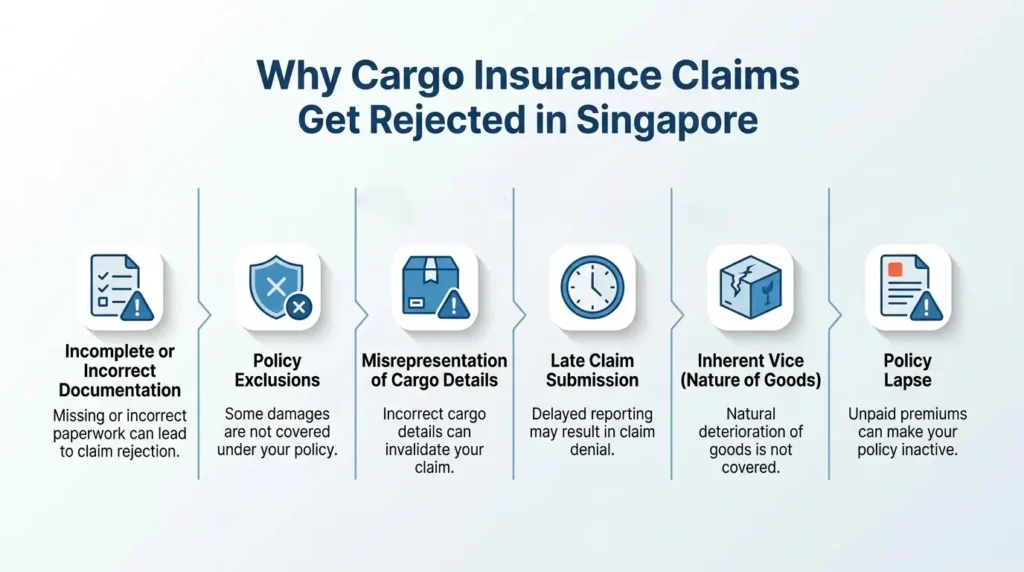
Here are the most frequent reasons:
1. Incomplete or Incorrect Documentation
One of the biggest reasons for claim rejection is missing or inaccurate paperwork. If your documents don’t match or key details are missing, insurers may not process your cargo claims insurance request.
2. Policy Exclusions
Not all types of damage or loss are covered. For example, issues like improper packaging or delays in transit may fall outside your cargo insurance coverage. Always check what your cargo insurance policy includes and excludes.
3. Misrepresentation of Cargo Details
If the cargo type, value, or condition is not declared correctly, your claim can be denied. Even small errors in declaration can create problems during the cargo insurance claim process.
4. Late Claim Submission
Timing matters. If you don’t report the damage or loss within the required timeframe, your claim procedure for cargo insurance may become invalid.
5. Inherent Vice (Nature of Goods)
Some goods are naturally prone to damage, like perishable or fragile items. If the loss is due to the internal nature of the cargo, insurers may reject the claim.
6. Policy Lapse
If your premium was not paid on time, your cargo insurance policy may not be active at the time of loss, leading to automatic rejection.
First Things to Do After Your Cargo Insurance Claim in Singapore Is Rejected
If your cargo insurance claim in Singapore gets rejected, your first reaction might be frustration—but what you do next is what really matters. Acting quickly and taking the right steps can make a big difference in whether your claim gets reconsidered.
Here’s what you should do immediately:
1. Stay Calm and Act Quickly
It’s easy to panic after a rejection, especially if the loss is significant. But instead of rushing into decisions, take a step back and focus on understanding the situation. At the same time, don’t delay—most claims have strict timelines for appeal.
2. Carefully Review the Denial Letter
Your insurer will provide a reason for rejecting the claim. Read this letter thoroughly and pay attention to specific details.
Look for:
- The exact reason for rejection
- Any policy clauses mentioned
- Missing documents or conditions
This step is crucial in understanding what went wrong in your cargo insurance claim process.
3. Identify the Exact Reason for Rejection
Don’t assume the reason—pinpoint it clearly. Whether it’s documentation, policy exclusion, or delayed reporting, knowing the exact issue helps you take the right corrective action.
4. Note Deadlines for Appeal or Response
Most insurers give a limited window to respond or appeal. Missing this deadline could close your case permanently.
Make sure you:
- Check the timeline mentioned in the denial
- Prepare your response within the allowed period
Taking these initial steps puts you in a stronger position to move forward and resolve the issue effectively.
Step-by-Step Process to Handle a Rejected Cargo Insurance Claim in Singapore
Once your cargo insurance claim in Singapore is rejected, the next step is to follow a structured approach to fix the issue and improve your chances of approval. Let’s go step by step.
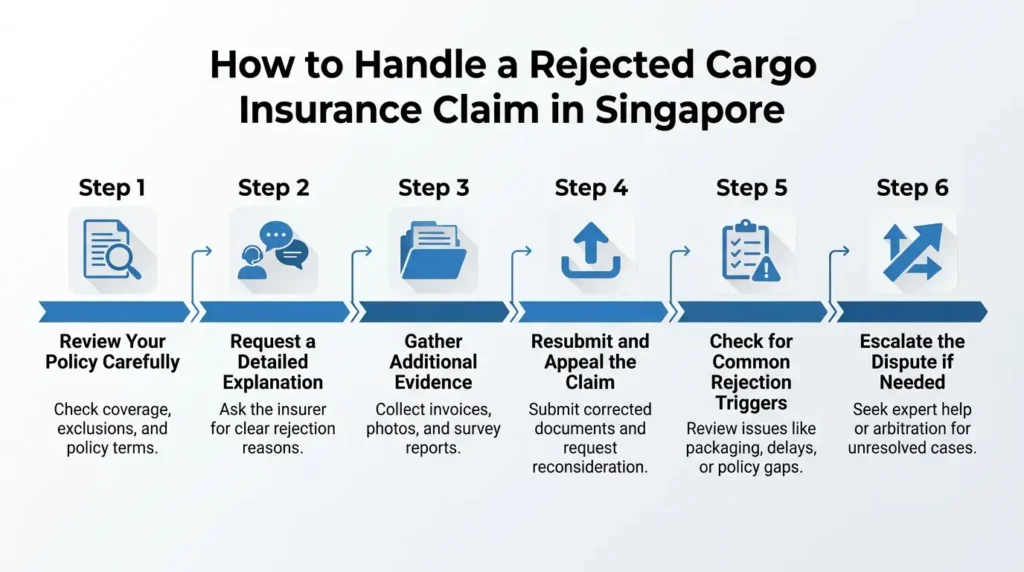
Step 1: Review Your Policy Carefully
Start by going through your cargo insurance policy in detail. Many claim rejections happen simply because the coverage terms are misunderstood.
Check:
- What is covered under your cargo insurance coverage
- What exclusions are mentioned
- Whether the rejection reason matches the policy wording
This will help you decide whether the rejection is valid or can be challenged.
Step 2: Request a Detailed Explanation from the Insurer
If the denial reason is not clear, don’t hesitate to ask your insurer for clarification.
You can:
- Request a written explanation
- Ask them to highlight the exact policy clause
- Clarify any technical terms
This step ensures transparency in the cargo insurance claim process and helps you prepare a strong response.
Step 3: Gather Additional Evidence
Now it’s time to strengthen your case. Re-examine the loss and collect all necessary proof.
Important documents include:
- Surveyor or inspection reports
- Cargo invoices and shipping documents
- Photos showing the damage
- Emails or communication records
The stronger your evidence, the better your chances of getting your cargo claims insurance approved.
Step 4: Resubmit and Appeal the Claim
After gathering all required documents, you can move forward with the appeal.
Make sure to:
- Submit any missing or corrected documents
- Clearly address the insurer’s objections
- File a formal reconsideration request
A well-prepared appeal can often reverse the outcome of your cargo insurance claim in Singapore.
Step 5: Check for Common Rejection Triggers
Before resubmitting, double-check if your claim falls under common rejection areas.
These include:
- Poor or inadequate packing
- Delayed reporting of damage
- Inherent vice (nature of goods)
- Policy lapse due to unpaid premiums
Fixing these issues can significantly improve your claim procedure for cargo insurance.
Step 6: Escalate the Dispute if Needed
If your claim is still rejected after appeal, you may need to take it further.
Options include:
- Arbitration (if mentioned in your policy)
- Consulting an insurance expert or legal advisor
- Seeking professional help for complex or high-value claims
Escalation is often the best route when dealing with large or complicated cargo insurance claim cases.
Following this step-by-step approach helps you stay organized and increases your chances of a successful outcome.
Documents Required for Cargo Insurance Claim in Singapore
When it comes to getting your cargo insurance claim in Singapore approved, documentation plays a critical role. Even a small missing detail can delay the process or lead to rejection. That’s why it’s important to have all the required documents ready and accurate.
Here are the key documents you should prepare:
1. Insurance Policy Copy
This is the most important document. It proves that your shipment was covered under a valid cargo insurance policy at the time of transit.
2. Invoice and Packing List
These documents provide details about the cargo, including its value, quantity, and description. They are essential for verifying the loss amount in the cargo insurance claim process.
3. Bill of Lading / Airway Bill
This acts as proof of shipment and contains important information such as origin, destination, and carrier details. It is a critical part of any cargo claims insurance case.
4. Survey or Inspection Report
A surveyor’s report helps establish the cause and extent of damage. Insurers often rely on this document to validate your claim.
5. Photos of Damaged Goods
Clear visual evidence strengthens your claim. Make sure to take photos immediately after discovering the damage.
6. Claim Form and Communication Records
Submit a properly filled claim form along with all communication records with the insurer, shipping company, or freight forwarder. This helps support your claim procedure for cargo insurance.
Having all these documents ready not only speeds up your claim but also improves your chances of approval.
How to Avoid Cargo Insurance Claim in Singapore Rejection in the Future
While handling a rejected cargo insurance claim in Singapore is important, preventing rejection in the first place is even better. By following a few simple best practices, you can reduce risks and make your cargo insurance claim process much smoother.
Here’s what you should focus on:
1. Maintain Accurate Documentation
Always ensure that your shipping documents are complete and correct. Even small errors in invoices, packing lists, or declarations can create issues during cargo claims insurance processing.
2. Follow Proper Packaging Standards
Improper or weak packaging is one of the most common reasons for rejection. Make sure your goods are packed according to industry standards, especially for fragile or high-value items.
3. Report Losses Immediately
Timing is critical. As soon as you notice any damage or loss, inform your insurer without delay. Late reporting can make your cargo insurance claim in Singapore invalid.
4. Understand Your Cargo Insurance Coverage
Before shipping, take time to understand what your cargo insurance policy covers and what it excludes. This helps you avoid surprises during the claim procedure for cargo insurance.
5. Choose the Right Insurance Plan
Not all policies are the same. Selecting the right cargo insurance coverage based on your cargo type, route, and risk level can make a big difference in claim approval.
By being proactive and careful, you can avoid most common issues and ensure a smoother claim experience in the future.
Also Read: MAS Regulations for Marine Cargo Insurance in Singapore



4 Responses