

Introduction
Buying cargo insurance for small business in Singapore is one of the smartest ways to protect your shipments from unexpected risks. Whether you’re transporting goods locally or exporting overseas, the right cargo insurance policy helps cover financial losses caused by damage, theft, or loss during transit.
Small businesses often operate with tighter budgets, making every shipment critical to revenue and customer satisfaction. Without adequate cargo insurance coverage, a single incident can lead to costly disruptions.
The growing importance of shipment protection is reflected in the global cargo insurance market. The market was valued at $71.4 billion in 2022 and is projected to reach $106 billion by 2032, growing at a CAGR of 4.1% from 2023 to 2032. This growth highlights how businesses worldwide are prioritizing risk management and protecting goods throughout the supply chain.
In this guide, you’ll explore how to buy cargo insurance online, understand the different coverage options available, and choose a policy that fits your business while considering factors that affect cargo insurance cost.
What Is Cargo Insurance for Small Businesses?
Cargo insurance for small business is a type of insurance that protects your goods from financial loss if they’re damaged, lost, or stolen during transit. Whether you’re shipping by sea, air, or road, the right cargo insurance policy helps safeguard your shipments against unexpected risks and minimizes the financial impact of disruptions.
Unlike carrier liability, which typically provides limited compensation, cargo insurance coverage is designed to protect the declared value of your goods based on your policy terms. This makes it an important investment for businesses that regularly ship products within Singapore or internationally.

How Cargo Insurance Works
A cargo insurance policy covers your shipment from specific risks during transit, depending on the level of coverage you choose. Once your goods are insured, you can file a claim if they’re damaged, lost, or affected by a covered event while being transported.
Coverage may apply to shipments moving by sea, air, road, or a combination of transport methods. The policy details what is covered, any exclusions, the insured value of the goods, and the claims process. Choosing the right policy ensures your business has the appropriate protection for its shipping activities.
What Types of Goods Can Be Insured?
Most commercial goods can be covered under insurance for cargo, including:
- Electronics and consumer goods
- Clothing and textiles
- Machinery and equipment
- Food and beverage products
- Furniture and home décor
- Retail and e-commerce products
The coverage available depends on the type of goods, their value, and the shipping method.
Who Should Buy Cargo Insurance?
Small business cargo insurance is ideal for businesses that transport goods locally or internationally, including:
- Importers and exporters
- E-commerce businesses
- Manufacturers
- Wholesalers and distributors
- Freight forwarders
If your business relies on shipping products to customers or suppliers, investing in the right cargo insurance coverage can help protect your revenue and keep your operations running smoothly.
Why Small Businesses in Singapore Need Cargo Insurance
For small businesses, every shipment represents valuable inventory and revenue. If goods are damaged, lost, or stolen during transit, the financial impact can be significant. That’s why cargo insurance for small business is an essential safeguard for businesses that ship products within Singapore or internationally.
Unexpected events can happen at any stage of the supply chain. The right cargo insurance coverage helps reduce financial losses caused by:
- Transit damage during loading, unloading, or transportation
- Theft or loss while goods are in transit or storage
- Natural disasters such as floods, storms, or fires
- Handling accidents that result in damaged cargo
- International shipping risks, including longer transit times and multiple handling points
Beyond protecting your shipments, a cargo insurance policy helps maintain cash flow and customer trust. Instead of bearing the full cost of replacing damaged or lost goods, your business has financial protection that supports smoother operations and faster recovery from unexpected incidents.
What Types of Cargo Insurance Can You Buy?
Different shipments face different risks, so choosing the right cargo insurance policy depends on how your goods are transported. Whether you ship by sea, air, road, or courier, selecting the appropriate cargo insurance coverage helps ensure your goods are protected throughout their journey.
1):- Marine Cargo Insurance
Marine cargo insurance protects goods transported by sea against risks such as damage, loss, theft, and certain natural events. It’s ideal for businesses involved in importing or exporting goods internationally.
2):- Air Freight Insurance
Air freight insurance covers cargo transported by air. It’s well suited for urgent, high-value, or time-sensitive shipments that require fast and reliable protection.
3):- Land Transport Insurance
Land transport insurance protects goods moved by road or rail. It’s commonly used for domestic deliveries and cross-border transportation within the region.
4):- Parcel Insurance
Parcel insurance is designed for smaller shipments sent through courier or postal services. It’s a popular choice for e-commerce businesses that ship products directly to customers.
5):- Sea Freight Insurance
Sea freight insurance provides coverage for goods transported via ocean freight, helping businesses manage the risks associated with long-distance international shipping.
How to Buy Cargo Insurance for Small Business in Singapore
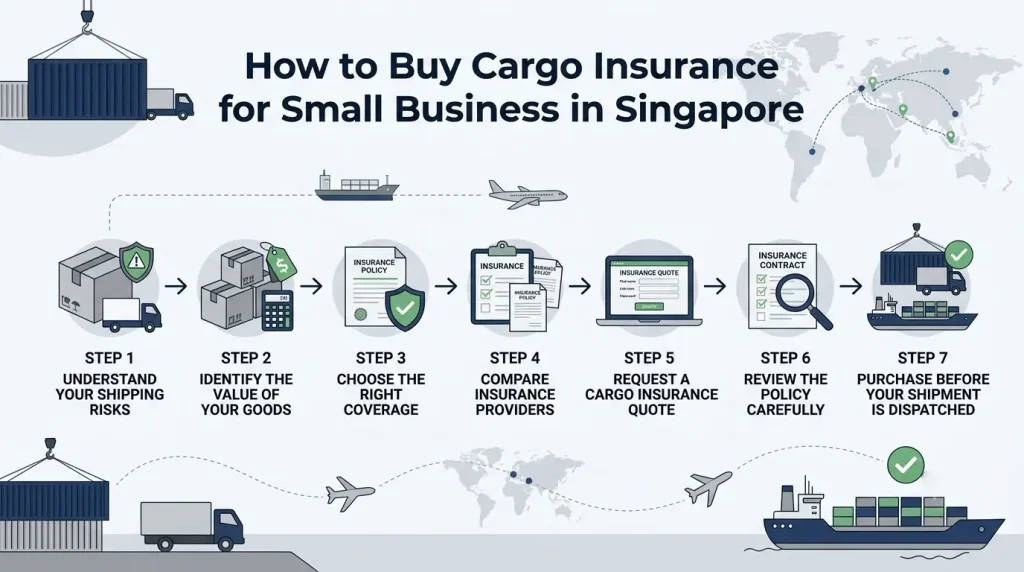
Buying cargo insurance for small businesses doesn’t have to be complicated. By following a few simple steps, you can choose a policy that protects your shipments while matching your business needs and budget.
Step 1: Understand Your Shipping Risks
Start by assessing the risks involved in your shipments. Consider the type of goods you transport, their destination, shipping frequency, and whether they travel by sea, air, or land. This helps determine the level of cargo insurance coverage you need.
Step 2: Identify the Value of Your Goods
Calculate the total value of each shipment, including the cost of the goods, freight charges, and any additional expenses. Accurately valuing your cargo helps you avoid being underinsured or overinsured.
Step 3: Choose the Right Coverage
Select a cargo insurance policy that matches your shipping requirements. Consider factors such as the mode of transport, shipment value, destinations, and the types of risks you want the policy to cover.
Step 4: Compare Insurance Providers
Not all insurance providers offer the same coverage or level of service. Compare policy benefits, exclusions, claims support, and pricing to find a solution that suits your business.
Step 5: Request a Cargo Insurance Quote
Once you’ve shortlisted a provider, request a quote based on your shipment details. Many insurers now let businesses buy cargo insurance online, making the process faster and more convenient.
Step 6: Review the Policy Carefully
Before purchasing, read the policy terms to understand what’s covered, what’s excluded, coverage limits, deductibles, and the claims process. A clear understanding of your policy helps prevent surprises later.
Step 7: Purchase Before Your Shipment Is Dispatched
Always arrange your insurance before your goods leave the warehouse. Buying coverage in advance ensures your shipment is protected from the moment transit begins.
What Does Cargo Insurance Typically Cover?
The exact cargo insurance coverage depends on your policy and insurer, but most policies are designed to protect your goods against common risks during transit. Understanding what’s covered helps you choose the right cargo insurance policy for your business.
Typical coverage may include:
- Physical Damage: Protection if goods are damaged during loading, unloading, or transportation.
- Theft: Covers losses resulting from theft of insured cargo while it’s in transit.
- Fire: Provides financial protection if cargo is damaged or destroyed by fire.
- Accidental Loss: Covers losses caused by unforeseen incidents during transportation.
- Loading and Unloading Damage: Protects goods that are damaged while being loaded onto or unloaded from a vehicle, aircraft, or vessel.
- General Average: For sea shipments, this covers your contribution to shared losses when cargo or expenses are intentionally sacrificed to protect the vessel and remaining cargo.
- Weather-Related Damage: Depending on the policy, protection may extend to losses caused by severe weather, storms, or other natural events.
Keep in mind that every cargo insurance policy has its own terms, conditions, and exclusions. Before purchasing, review the policy carefully to ensure it provides the level of protection your shipments require.
Common Mistakes Small Businesses Make When Buying Cargo Insurance
Choosing the right cargo insurance for small business is just as important as deciding to purchase it. Avoiding these common mistakes can help ensure your shipments are properly protected and reduce the risk of unexpected financial losses.
1):- Underinsuring Your Cargo
Insuring your goods for less than their actual value may lower your premium, but it can also result in reduced claim payouts if a loss occurs.
2):- Relying Only on Carrier Liability
Many businesses assume the carrier will cover any damage or loss. In reality, carrier liability is often limited and may not reflect the full value of your shipment.
3):- Choosing a Policy Based Only on Price
The cheapest policy isn’t always the best option. Compare cargo insurance coverage, policy limits, exclusions, and claims support to ensure you’re getting the protection your business needs.
4):- Ignoring Policy Exclusions
Every cargo insurance policy includes specific terms and exclusions. Reviewing these before purchasing helps you understand what is and isn’t covered.
5):- Buying Insurance After Shipment
Cargo insurance should be arranged before your goods are dispatched. Waiting until the shipment is already in transit may leave your cargo uninsured.
6):- Not Reviewing Shipment Values Regularly
As your business grows, the value of your shipments may change. Reviewing your coverage regularly helps ensure your policy continues to provide adequate protection.
Also Read: Cargo Insurance Calculator: How to Estimate Shipping Insurance Costs