

Introduction
In today’s connected world, global cargo transportation is the engine that drives international trade and business growth. Every day, millions of tons of goods move across borders by sea, air, and land—keeping supply chains active and economies thriving. However, this constant movement also exposes businesses to multiple cargo transportation risks.
As logistics networks become more complex, cargo transportation risks continue to increase. From cargo theft and physical damage to cyber threats and compliance challenges, these transportation risks can disrupt operations, drain profits, and damage business reputation. Cargo risks in international trade are no longer rare events—they are ongoing challenges that every shipper must address.
This is why risk management in logistics and transport is no longer optional. Practices such as verifying carriers, ensuring secure cargo handling, and investing in transport risks and cargo insurance coverage play a critical role in protecting shipments. Whether you’re an exporter, importer, or freight forwarder, understanding threats to cargo operations and taking proactive steps can significantly reduce exposure to loss.
In simple terms, managing cargo transportation risks isn’t just about avoiding losses—it’s about enabling smooth, secure, and profitable global trade.
Why Understanding Cargo Transportation Risks Matters
Managing cargo transportation risks isn’t just about protecting shipments—it’s about safeguarding your entire business. In global trade, even a single disruption can trigger ripple effects that impact finances, customer relationships, and brand reputation.
Every year, businesses lose billions due to cargo risks in international trade, including theft, damaged goods, transportation delays, and regulatory errors. These transportation risks often result in missed deadlines, broken trust, and long-term operational setbacks. For time-sensitive industries like retail, electronics, and pharmaceuticals, one delayed shipment can disrupt production or delay market launches.
This is why risk management in logistics and transport plays a critical role in business continuity. When companies understand common threats to cargo operations—such as fraudulent carriers, extreme weather, or cyberattacks—they can reduce exposure and maintain better control over their supply chains.
For exporters, importers, and freight forwarders, awareness combined with smart strategies like real-time tracking, trained staff, and transport risks and cargo insurance creates a strong safety net. Addressing cargo transportation risks early isn’t just precautionary—it’s a strategic move for stability, customer satisfaction, and profitable operations.
Top Cargo Transportation Risks Businesses Must Watch For
In global trade, understanding cargo transportation risks is essential for any business that ships goods. From theft and damage to cyber threats and compliance issues, these risks can strike at any point in the journey—causing delays, financial losses, and reputational harm. Here are the most common threats logistics and supply chain managers need to watch closely.
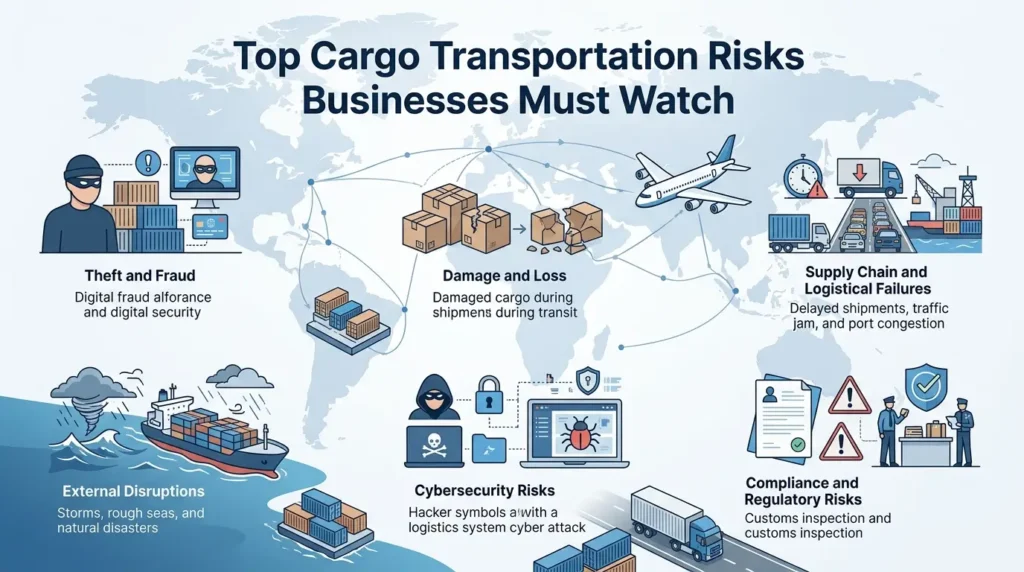
1. Theft and Fraud
Cargo theft remains one of the most pressing challenges in logistics risk management. Criminals now use both traditional and tech-driven tactics to intercept shipments.
- Strategic and fraudulent theft: Scammers pose as legitimate carriers using fake documents or websites to hijack shipments. One successful scam can result in multiple losses.
- Cyber-facilitated theft: Hackers use phishing and malware to manipulate shipment data, rerouting valuable cargo to unauthorized locations.
- Targeted commodity theft: High-value items like electronics, pharmaceuticals, and household goods are prime targets due to their resale potential.
- Physical theft: Despite modern security, cargo remains vulnerable at rest stops, ports, and warehouses—especially when left unattended.
2. Damage and Loss
Cargo can be damaged at any stage—loading, transit, or unloading—affecting delivery timelines and customer satisfaction.
- Improper handling and stowage: Poor container loading, forklift mishandling, or lack of bracing can lead to crushing or shifting.
- Environmental damage: Humidity, rain, and temperature swings can spoil sensitive or perishable goods.
- Pilferage: Small-scale theft during transit often signals deeper security flaws in the supply chain.
These incidents not only raise replacement costs but also erode business reliability.
3. Supply Chain and Logistical Failures
Even well-planned logistics systems can face unexpected breakdowns.
- Transportation delays: Caused by port congestion, customs bottlenecks, or severe weather.
- Workforce shortages: A lack of trained drivers or warehouse staff can slow down operations.
- Operational risks: Equipment failures, poor route planning, and communication gaps lead to inefficiencies and lost time.
Effective risk management in transportation includes backup plans and predictive systems to handle such disruptions.
4. External Disruptions
Some risks are beyond a company’s control—but still demand preparation.
- Natural disasters: Floods, hurricanes, wildfires, and earthquakes can damage infrastructure and block trade routes.
- Geopolitical instability: Conflicts, trade bans, and regional unrest—like the war in Ukraine or Red Sea attacks—can halt or reroute shipments.
- Economic instability: Inflation and fuel price fluctuations can drive up transportation costs and squeeze margins.
These external threats highlight the need for flexible supply chains and strong contingency planning.
5. Cybersecurity Risks
As logistics becomes more digitized, cybersecurity is now a core concern.
- Data breaches: Hackers target shipping companies to access sensitive customer and shipment data.
- Operational disruption: Ransomware and system shutdowns can halt deliveries and tracking.
- Third-party vulnerabilities: Weak supplier security can open backdoors for cybercriminals.
Protecting logistics data and systems is now a key part of risk management in logistics and transport.
6. Compliance and Regulatory Risks
Navigating international trade regulations is complex—and mistakes are costly.
- Customs and tariffs: Incorrect paperwork can lead to delays, fines, or seizure of goods.
- Safety regulations: Transporting hazardous materials requires strict compliance with safety standards.
- Varying laws: Data privacy, labor, and environmental laws differ across countries. Non-compliance can trigger legal penalties and operational setbacks.
Staying updated with global compliance requirements is essential for safe, smooth, and lawful logistics operations.
How Cargo Insurance Helps Manage These Risks
In global trade, even the most carefully planned shipments can run into unexpected disruptions. That’s where cargo insurance becomes essential—it acts as a financial safety net, protecting businesses from losses caused by damage, theft, or missing goods during transit. Choosing the right policy is a key part of smart transportation risk management.
1):- Protection Against Financial Loss
Cargo insurance covers a wide range of issues—from damaged goods and stolen shipments to complete loss in transit. Without coverage, businesses often absorb these costs themselves, which can severely impact profitability. Whether your cargo moves by sea, air, or land, a tailored marine cargo policy or inland insurance plan helps safeguard your investment.
2):- Coverage Across All Modes of Transport
Modern logistics involves multiple transportation modes. The right insurance ensures your cargo is protected throughout its journey—from loading to final delivery.
a):- Marine Cargo Insurance
Marine cargo insurance provides coverage for goods transported by sea, protecting shipments from risks like rough weather, piracy, accidents at sea, and port-related damage. It ensures that exporters and importers can recover financial losses if cargo is damaged, lost, or stolen during maritime transit.
b):- Air Cargo Insurance
Air cargo insurance safeguards shipments transported by air against mishandling, turbulence, theft, or accidents during flight. This coverage is essential for high-value, time-sensitive goods, ensuring businesses maintain delivery schedules and minimize financial exposure from air transit risks.
c):- Land Transport Insurance
Land transport insurance protects cargo during road or rail transit. It covers risks such as vehicle accidents, fires, theft at rest stops, and roadside incidents. This insurance ensures that goods reach their destination safely, helping businesses avoid unexpected losses and supply chain disruptions.
3):- Minimizing Business Disruption
When unexpected incidents occur, cargo insurance provides quick compensation—helping businesses maintain operations and meet delivery commitments. This financial recovery reduces downtime and protects your brand reputation.
4):- Supporting Supply Chain Resilience
Cargo insurance does more than cover losses—it strengthens your entire logistics strategy. When paired with risk management in logistics and transport, it helps build resilient supply chains. Insured shipments mean fewer financial shocks, smoother deliveries, and stronger trust between carriers, suppliers, and clients.
Practical Strategies to Minimize Cargo Risks
While cargo insurance provides essential protection, the smartest way to manage transportation risks is through prevention. With proactive planning, smart technology, and strong compliance, businesses can reduce exposure to theft, damage, and costly disruptions. Here are five proven strategies every logistics team should consider.
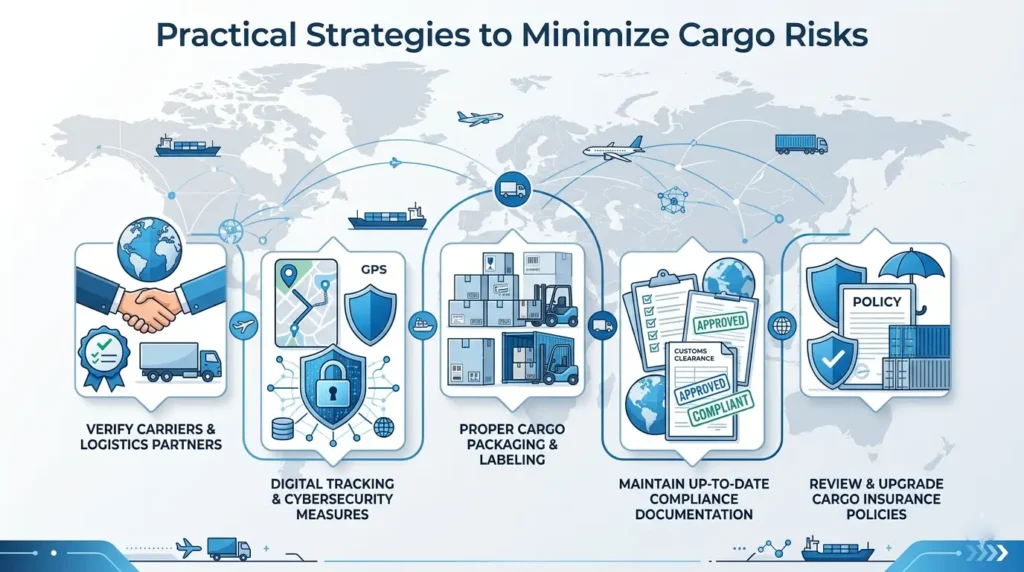
1. Verify Carriers and Logistics Partners
Fraudulent or unreliable carriers are a major vulnerability in cargo transport. Always work with verified logistics partners who have proper licenses, insurance, and a solid reputation.
- Conduct background checks and verify carrier registration numbers
- Use secure, vetted platforms to book freight services
- Avoid sharing sensitive shipment details with unknown parties
This simple step helps prevent strategic theft and impersonation scams—now common through fake websites and fraudulent documentation.
2. Implement Digital Tracking and Cybersecurity Measures
Technology can be both a strength and a risk. Secure your logistics network with strong cybersecurity protocols and real-time tracking systems.
- Use GPS and IoT devices for shipment visibility
- Regularly update passwords and system software
- Train staff to spot phishing attempts and suspicious emails
Strong cyber risk management in transportation helps prevent load redirection scams and system shutdowns that can cripple supply chains.
3. Ensure Proper Cargo Packaging and Labeling
Physical damage is one of the most frequent causes of loss during transit. Make sure your cargo is packed to withstand handling, movement, and environmental stress.
- Use high-quality, moisture-resistant packaging materials
- Brace and secure goods properly within containers
- Label fragile and temperature-sensitive items clearly
Good packaging not only protects your goods—it reflects professionalism and care in your logistics operations.
4. Maintain Up-to-Date Compliance Documentation
Regulatory non-compliance can lead to fines, delays, and even cargo seizure. Keep your shipping paperwork accurate and current to avoid costly setbacks.
- Ensure customs documents and declarations are complete
- Stay updated with changing tariff codes and safety regulations
- Verify that hazardous materials meet transport compliance standards
Consistent compliance builds trust with authorities and partners while minimizing shipment delays.
5. Regularly Review and Upgrade Cargo Insurance Policies
As your business grows, so do your risks. Review your cargo insurance policies regularly to ensure they match your current shipping volume, routes, and cargo types.
- Update coverage for high-value or seasonal goods
- Add protection for war, strikes, or cyber threats when needed
- Consult cargo insurance experts to tailor your policy
Regular updates ensure your business stays protected—even as logistics trends and threats evolve.
Impact of Ignoring Cargo Transportation Risks
Overlooking cargo transportation risks can lead to serious setbacks—financially, operationally, and reputationally. Without proper risk management and cargo insurance, businesses leave themselves exposed to disruptions that ripple across the entire supply chain.
1. Financial Burden from Uninsured Losses
Without insurance, any theft, damage, or loss must be absorbed by the business. For high-value shipments, this can mean major hits to profitability and cash flow.
2. Supply Chain Breakdowns
Delays, damaged goods, or missing cargo can halt production and upset delivery schedules. Repeated issues may strain relationships with suppliers, distributors, and customers.
3. Loss of Customer Trust and Market Credibility
Frequent shipping problems can erode client confidence. Missed deadlines or unreliable service may impact repeat business and long-term partnerships.
4. Legal and Regulatory Consequences
Non-compliance with customs, safety, or international shipping laws can lead to fines, penalties, or legal action. Ignoring transportation risk management puts your business at unnecessary risk.
Also Read: What’s the Difference Between Cargo and Freight Insurance? A Beginner’s Guide




3 Responses