


Introduction
Freight forwarders play a key role in global trade by managing shipments across sea, air, and land. However, handling international logistics also brings risks such as cargo damage, delivery mistakes, or legal claims. This makes understanding the Freight Forwarders Liability Insurance Cost essential for logistics businesses.
The demand for logistics insurance is rising as well. The global logistics insurance market was valued at more than $74 billion in 2025 and is projected to reach around $94 billion by 2032, reflecting the growing need for risk protection.
In most cases, the Freight Forwarders Liability Insurance Cost falls between 0.3% and 0.5% of the cargo’s commercial value, depending on shipment type, coverage limits, and operational risks.
What Is Freight Forwarders Liability Insurance?
Freight forwarders act as the link between shippers and carriers, making sure goods move smoothly across borders and different modes of transport. But with this responsibility comes risk—cargo can be damaged, lost, or delayed, and mistakes in documentation or handling can lead to costly claims.
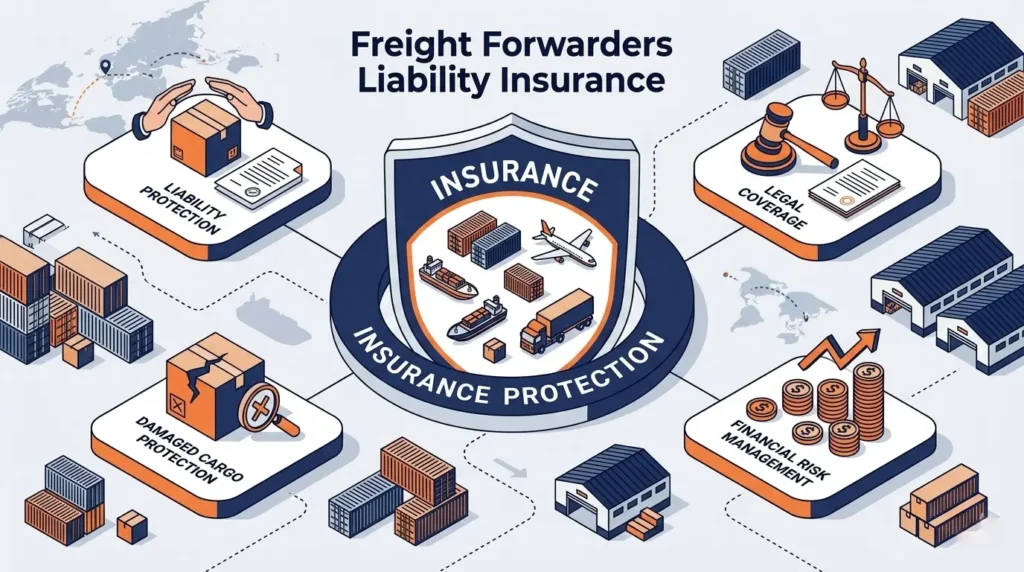
That’s where Freight Forwarders Liability Insurance steps in. It’s designed to protect logistics providers against financial losses that arise from these risks. In simple terms, it covers the forwarder’s legal responsibility when something goes wrong during the shipping process.
Why freight forwarders need it:
- Legal responsibility: Forwarders are accountable for shipments in their care, and liability insurance ensures they’re covered if claims arise.
- Customer trust: Clients feel more confident working with insured partners who can guarantee compensation if issues occur.
- Protection against operational risks: From damaged goods to third‑party claims, insurance safeguards the business from unexpected expenses that could disrupt operations.
Why Understanding the Cost Matters
Knowing the Freight Forwarders Liability Insurance Cost isn’t just about budgeting—it’s about making smarter business decisions. For logistics companies, insurance is both a safety net and a key operational expense. Understanding the cost helps you balance protection with profitability.
Here’s why cost awareness is important:
- Protecting Profit Margins: Insurance premiums are recurring expenses. Knowing how much you’ll pay allows you to plan effectively and avoid unexpected financial strain.
- Boosting Competitiveness: Companies that understand their insurance costs can price their services more competitively without compromising on coverage.
- Building Client Confidence: Customers trust freight forwarders who are insured. When your clients know you’re protected, it strengthens relationships and encourages repeat business.
- Better Planning: With transparent pricing, you can choose the right coverage levels, add-ons, and regions without overspending.
Ultimately, understanding the Freight Forwarders Liability Insurance Cost helps logistics businesses operate more confidently while protecting themselves from financial and legal risks.
Key Factors That Affect the Cost
The Freight Forwarders Liability Insurance Cost isn’t fixed—it depends on several factors that reflect the risk and complexity of your operations. Understanding these factors helps you anticipate costs and choose the right coverage.
1. Type and Value of Cargo
High-value or fragile items, like electronics, pharmaceuticals, or machinery, often come with higher premiums. General goods typically cost less to insure.
2. Mode of Transport
- Air Freight Insurance: Higher liability limits, faster transit, but more expensive coverage.
- Sea Freight Insurance: Exposed to weather, port handling, and marine risks.
- Land Transport Insurance: Costs vary based on distance, routes, and truck safety.
- Parcel Shipments Insurance: Smaller shipments may need specialized add-ons.
3. Coverage Limits, Exclusions & Add-Ons
Higher coverage limits increase the Freight Liability Insurance Cost. Optional add-ons—like parcel insurance, extended liability, or multi-modal protection—also affect pricing.
4. Geographic Coverage
Insurance covering multiple countries, such as Singapore, Thailand, Malaysia, Cambodia, China, and India, may have higher premiums due to regional risk variations.
5. Claims History and Risk Profile
Freight forwarders with a history of claims pay higher premiums. A clean record shows lower risk and can reduce costs.
6. Business Size
- Small & Medium Enterprises (SMEs): Lower premiums are usually the result of reduced volumes.
- Large Logistics Companies: Higher premiums because of larger fleets, more shipments, and increased liability.
Average Cost Range in 2026
When it comes to Freight Forwarders Liability Insurance Cost, pricing can vary widely depending on your operations, cargo type, and region. While exact premiums differ from company to company, here’s a general idea of what businesses can expect in 2026.
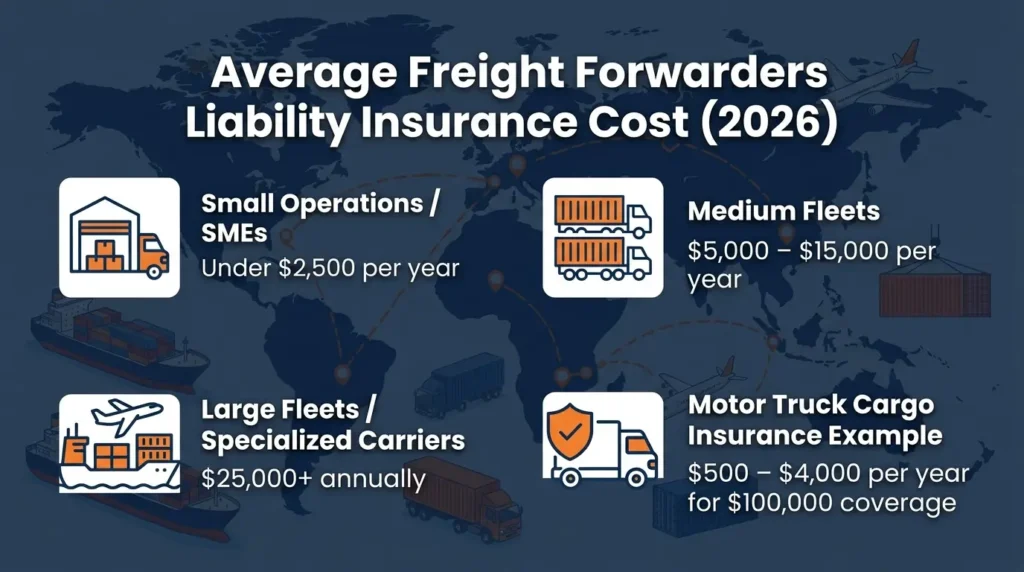
Estimated Annual Cost
- Small Operations / SMEs: Typically under $2,500 per year for basic coverage.
- Medium Fleets: Around $5,000 – $15,000 per year, depending on shipment volume and routes.
- Large Fleets or Specialized Carriers: Can exceed $25,000 annually, especially if handling hazardous materials or high-value cargo.
- Motor Truck Cargo Insurance Example: $500 – $4,000 per year for $100,000 coverage.
Regional Differences
- Singapore: Premiums tend to be moderate to high due to strict regulations and dense shipping activity.
- Malaysia & Thailand: Generally less expensive than Singapore, providing freight forwarders with competitive rates.
- India & China: Flexible and cost-effective coverage options, varying by region and cargo type.
- Cambodia: Premiums depend on infrastructure and risk exposure in different routes.
SMEs vs. Large Companies
- SMEs usually pay less because their shipments and liabilities are smaller.
- Large logistics companies or forwarders handling specialized cargo face higher premiums due to increased risk exposure.
By understanding these ranges, freight forwarders can plan budgets more accurately and select coverage that fits both their operational needs and financial strategy.
What’s Included in the Premium
When you pay for Freight Forwarders Liability Insurance, you’re not just buying protection—you’re securing peace of mind for your business. Understanding what’s included helps explain why the Freight Forwarders Liability Insurance Cost varies and ensures you get the right coverage for your operations.
1. Coverage for Loss or Damage
The primary benefit is protection against loss, theft, or damage to cargo while it’s under your care. This ensures that your company isn’t financially liable for unexpected accidents.
2. Third-Party Liability
If your operations cause loss or damage to a client’s goods or property, this coverage handles claims made by third parties, including legal settlements.
3. Legal Defense Expenses
Even with proper care, disputes can arise. Liability insurance covers the costs of defending claims in court, including attorney fees and settlement expenses.
4. Optional Add-Ons
- Parcel Insurance: Protection for smaller shipments or express deliveries.
- Extended Liability: Additional coverage beyond standard policy limits.
- Multi-Modal Protection: Covers shipments across different transport modes, such as air, sea, and land.
These inclusions directly impact the Freight Liability Insurance Cost. The more comprehensive the coverage, the higher the premium, but it also means stronger protection against unexpected risks.
How to Reduce Freight Forwarders Liability Insurance Cost
While protecting your business is essential, there are smart ways to manage and even reduce your Freight Forwarders Liability Insurance Cost without compromising coverage. Here are practical strategies:
1. Bundle Insurance Policies
Combining different policies, such as marine cargo insurance, freight forwarder liability, and parcel coverage, often results in lower overall premiums. Bundling provides comprehensive protection while saving money.
2. Choose Practical Coverage Limits
Avoid over-insuring. Select coverage limits that reflect your actual shipment values and risk levels. This helps reduce unnecessary costs while maintaining sufficient protection.
3. Implement Strong Risk Management
Better operational procedures, employee training, and secure cargo handling reduce the likelihood of claims. Fewer claims lead to lower premiums over time.
4. Work With Specialized Providers
Insurance providers like CargoInsurePro understand freight forwarding risks and can offer tailored policies at competitive rates. Expertise in regional logistics helps optimize pricing without sacrificing protection.
5. Maintain a Clean Claims Record
Forwarders with minimal past claims are often rewarded with lower Freight Liability Insurance Costs, as they represent lower risk to insurers.
Also Read: Importance of Freight Forwarder’s Liability Insurance: A Complete Guide for Logistics Businesses



3 Responses