


Introduction
Every shipment your business sends carries financial risk. Goods can be damaged by rough handling, delayed due to unexpected events, or lost during transit. While cargo insurance helps protect your business from these losses, simply letting your policy renew each year without reviewing it may leave important gaps in your coverage.
Cargo Insurance Renewal is the perfect time to evaluate whether your current insurer still meets your business needs. As your company grows, your shipping routes, cargo values, and transportation methods often change. A policy that worked well a year ago may no longer provide the right level of protection today.
Instead of automatically renewing your existing policy, reviewing your options during renewal can help you secure better coverage, faster claims support, and more competitive premiums.
In this guide, you’ll learn when to renew cargo insurance, when it makes sense to switch providers, how the cargo insurance renewal process works, and the key factors to compare before making your decision.
What Is Cargo Insurance Renewal?
Cargo insurance renewal is the process of extending your existing cargo insurance policy before it expires to ensure your shipments remain protected without interruption. During renewal, you can either continue with your current insurer or switch to a new provider if you find better coverage, pricing, or service.
Instead of automatically renewing your policy, take this opportunity to review whether it still meets your business needs. As your business grows, your shipping routes, cargo values, and transportation methods may change, making it important to update your cargo insurance coverage accordingly.

Cargo Insurance Renewal vs. Switching Providers
Although they happen around the same time, renewing a policy and switching providers are not the same.
Cargo Insurance Renewal | Switching Providers |
Continue your existing policy with the same insurer. | Move your coverage to a new insurance provider. |
Usually involves updating policy details and paying the renewal premium. | Involves comparing policies, requesting quotes, and selecting a better option. |
Best if your current policy still meets your needs. | Best if you need better coverage, pricing, claims service, or regional support. |
Why You Should Review Your Policy at Renewal
Instead of automatically renewing your policy, use the cargo insurance renewal process to check whether your current coverage still matches your business needs. As your shipments, cargo values, and shipping routes change, reviewing your policy helps ensure you have the right protection before you renew cargo insurance.
Why Cargo Insurance Renewal Is the Best Time to Switch Providers
Cargo insurance renewal is the ideal time to review your policy and decide whether your current insurer still offers the best value. Since your policy is already due for renewal, you can compare providers, update your coverage, and make changes without interrupting protection for your shipments.
1):- Easier to Compare Policies Before Your Current Policy Expires
The renewal period gives you enough time to compare coverage, premiums, exclusions, and claim services from different insurers. This helps you make an informed decision instead of rushing after your policy has expired.
2):- Avoid Coverage Gaps
Switching providers during the cargo insurance renewal process ensures your new policy starts as soon as the current one ends. This keeps your shipments protected without any lapse in coverage.
3):- Negotiate Better Premiums
You can be eligible for more affordable premiums if your company expands or your shipping record gets better. Comparing providers at renewal can help you find better overall value without compromising your cargo insurance coverage.
4):- Upgrade Protection as Your Business Grows
Your current policy may no longer match your operations. If you’ve increased shipment values, expanded internationally, or use multiple transport modes, renewal is the right time to update your coverage.
5):- Add Coverage for New Shipping Routes or Cargo Types
Many businesses expand into new markets over time. If you now ship to countries like Thailand, Malaysia, Cambodia, China, or India, or transport different types of goods, switching providers during Cargo Insurance Renewal can help ensure your policy reflects your current business needs.
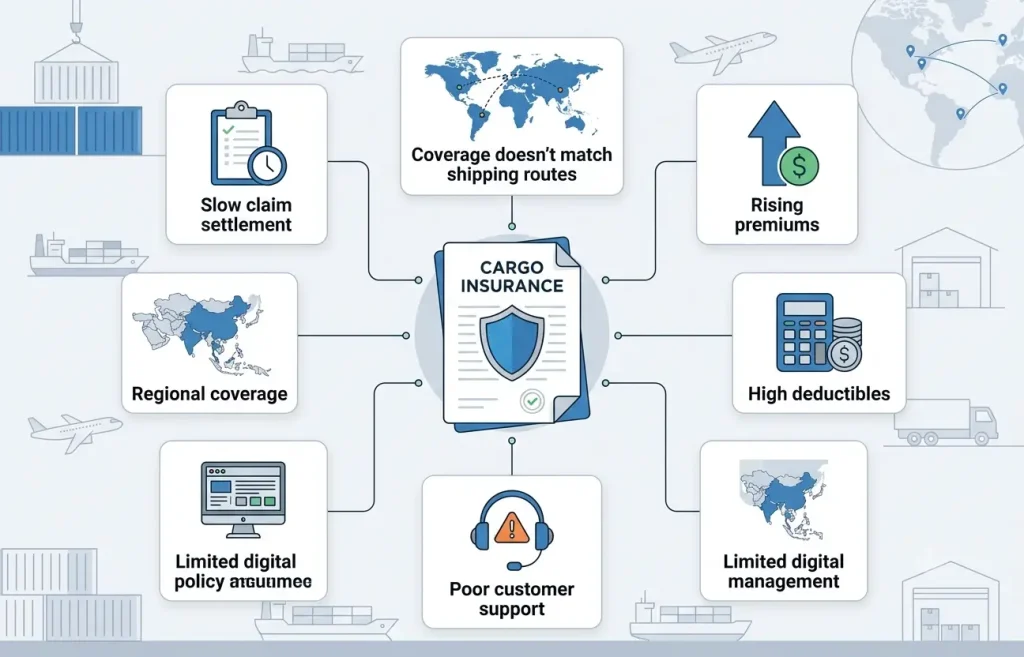
7 Signs Your Current Cargo Insurance Provider Is No Longer the Right Fit
Not every cargo insurance renewal should end with the same provider. As your business grows, your insurance needs can change. If you notice any of the signs below, it may be time to compare providers before you renew your policy.
1. Slow Claim Settlement
A delayed claim can disrupt your cash flow and business operations. If your insurer takes too long to process cargo insurance claims or provides limited communication during the claims process, it’s worth exploring providers with faster and more transparent claim support.
2. Coverage Doesn’t Match Your Current Shipping Routes
If your business has expanded into new markets or started using different transportation methods, your existing cargo insurance coverage may no longer be sufficient. Your policy should protect shipments across all the regions and transport modes your business uses.
3. Premiums Keep Increasing
Annual premium increases aren’t always justified. During cargo insurance renewal, compare quotes from multiple providers to determine whether you’re receiving competitive pricing for the coverage you need.
4. High Deductibles
A lower premium may come with a higher deductible, leaving your business to pay more when a claim occurs. Review both the premium and deductible to understand the true cost of your policy.
5. Poor Customer Support
Reliable customer support is essential, especially when shipments are delayed or damaged. If your insurer is difficult to reach or slow to respond, it may be time to consider a provider that offers better service.
6. Limited Digital Policy Management
Managing policies should be simple. If your insurer doesn’t provide online quotes, digital policy access, or an easy cargo insurance renewal process, switching to a provider with modern digital tools can save time and improve efficiency.
7. Limited Regional Coverage Across Asia
If your business ships to countries such as Singapore, Thailand, Malaysia, Cambodia, China, or India, make sure your insurer can support these destinations. Choosing a provider with broader regional coverage helps ensure consistent protection as your business expands.
How to Compare Cargo Insurance Providers Before Switching
Before you switch cargo insurance providers, compare more than just the premium. The best provider should offer comprehensive cargo insurance coverage, efficient claims support, and a policy that aligns with your shipping operations and business goals.
1):- Compare Coverage Types
Choose a provider that offers the types of insurance your business needs, including:
- Marine Cargo Insurance
- Air Freight Insurance
- Land Transport Insurance
- Sea Freight Insurance
- Parcel Insurance
- Freight Forwarder Liability Insurance
Having all your coverage under one provider can make policy management simpler and more efficient.
2):- Compare Coverage Limits
Review whether the policy provides enough protection for the value of your shipments. Your coverage limits should match your current cargo value to avoid being underinsured.
3):- Compare Premiums and Overall Value
Don’t choose a policy based on price alone. Compare premiums alongside deductibles, policy exclusions, coverage benefits, and claim support to determine the overall value.
4):- Review Claim Settlement Speed
A reliable provider should have a straightforward and timely claims process. Faster claim settlements can help your business recover more quickly after a shipment loss or damage.
5):- Check Geographic Coverage
Make sure the insurer provides coverage in all the regions where your business operates or plans to expand, including Singapore, Thailand, Malaysia, Cambodia, China, and India.
6):- Read Customer Reviews and Industry Experience
Customer reviews and industry experience can provide valuable insights into an insurer’s reliability, service quality, and ability to handle cargo insurance claims efficiently.
Step-by-Step Guide to Switching Cargo Insurance Providers
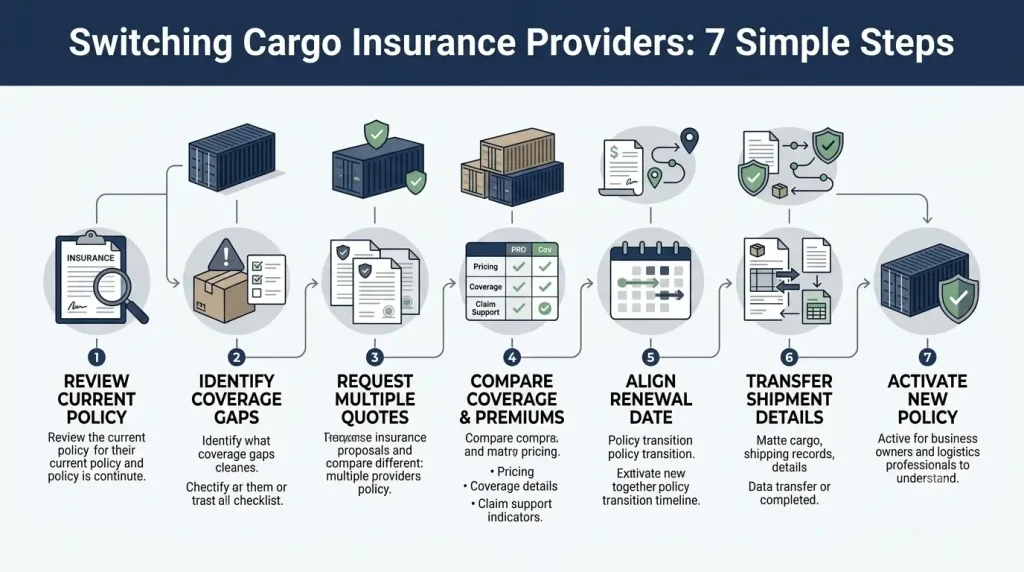
Switching providers during Cargo Insurance Renewal is straightforward when you follow a structured approach. These steps can help you move to a new insurer while maintaining continuous protection for your shipments.
Step 1: Review Your Current Cargo Insurance Policy
Start by reviewing your existing policy. Check your cargo insurance coverage, policy limits, exclusions, deductibles, renewal date, and previous cargo insurance claims. This helps you understand whether your current policy still meets your business needs.
Step 2: Identify Coverage Gaps
Evaluate whether your policy covers your current shipping operations. Consider changes such as higher-value shipments, new cargo types, or additional shipping routes that may require broader protection.
Step 3: Request Quotes from Multiple Providers
Obtain quotes from several insurers to compare your options. Request policies with similar coverage so you can make a fair comparison during the cargo insurance renewal process.
Step 4: Compare More Than Just Premiums
Don’t base your decision on price alone. Compare coverage limits, exclusions, deductibles, claims support, customer service, and geographic coverage to determine which provider offers the best overall value.
Step 5: Align Your New Policy with Your Renewal Date
Plan your switch so the new policy becomes active as soon as your current one expires. This helps prevent any gaps in cargo insurance coverage.
Step 6: Transfer Shipment Information and Required Documents
Provide accurate shipment details, cargo values, shipping routes, and any documents requested by your new insurer. Complete information helps ensure your policy is issued without delays.
Step 7: Activate the New Policy Before Cancelling the Old One
Before cancelling your existing policy, confirm that your new coverage is active. This final step ensures your shipments remain protected throughout the transition and allows you to renew cargo insurance with confidence.
Common Mistakes to Avoid During Cargo Insurance Renewal
A successful cargo insurance renewal isn’t just about choosing a new policy—it’s also about avoiding mistakes that could leave your business exposed to unnecessary risks. Keep these common pitfalls in mind during the renewal process.
1):- Automatically Renewing Your Existing Policy
Many companies renew their policies without checking to see if they still fulfill their needs. Always compare your options before making a decision.
2):- Cancelling Your Old Policy Before the New One Begins
Never cancel your existing policy until your new cargo insurance coverage is active. This helps prevent gaps in protection during the transition.
3):- Choosing the Cheapest Premium Without Reviewing Coverage
A lower premium may come with limited coverage, higher deductibles, or important exclusions. Focus on the overall value of the policy rather than the price alone.
4):-Missing Renewal Deadlines
Start the cargo insurance renewal process well before your policy expires. Renewing on schedule guarantees ongoing security for your shipments and allows you plenty of time to switch providers.
Why Choosing the Right Cargo Insurance Provider Matters
The right insurance provider does more than protect your shipments—it helps safeguard your business from financial losses and operational disruptions. During cargo insurance renewal, choosing a provider that aligns with your business needs can deliver long-term value beyond the policy itself.
1):- Better Financial Protection
A comprehensive policy helps cover losses caused by damage, theft, or other covered transit risks, reducing the financial impact on your business.
2):- Faster Claims Settlement
An insurer with an efficient claims process can resolve cargo insurance claims more quickly, helping your business recover faster and maintain cash flow.
3):- Lower Long-Term Costs
The right provider offers a balance of competitive premiums and comprehensive coverage, helping you avoid unexpected expenses from inadequate protection.
4):- Reduced Business Disruptions
Reliable cargo insurance coverage keeps your supply chain moving by minimizing the financial impact of shipment delays, damage, or loss.
5):- Coverage That Grows with Your Business
As your business expands into new markets or ships higher-value goods, your insurance policy should adapt to your changing requirements.
Also Read: How to Get a Marine Cargo Insurance Quote: Cost, Coverage & Step-by-Step Guide