


Introduction
A marine cargo insurance quote is an estimate of the premium needed to protect goods during transit. A marine insurance quote usually depends on factors such as cargo value, cargo type, shipping route, destination, transport method, and the level of cargo insurance coverage selected.
Getting a quote is simple when you have accurate shipment details ready. Importers and exporters can use it to compare marine cargo insurance pricing, understand coverage options, and reduce financial risks before their cargo begins its journey.
For example, an exporter shipping $100,000 of electronics from Singapore to India may receive a different quote depending on the cargo risk, route, and coverage required.
This guide explains how to get a marine cargo insurance quote, what affects its cost, what information insurers need, and how to choose suitable coverage for your shipment.
What Is a Marine Cargo Insurance Quote?
A marine cargo insurance quote is an estimate of the premium and coverage terms offered to protect goods during transit. Insurers typically consider the cargo value, type of goods, shipping route, origin, destination, and coverage required when preparing a quote.
A quote is not an active marine cargo insurance policy. It shows the expected cost and proposed protection, while the final policy defines the actual coverage, exclusions, limits, deductibles, and conditions.

What Information Is Included in a Quote?
A typical marine cargo insurance quote includes:
- Estimated insurance premium
- Coverage limits and insured value
- Covered risks and exclusions
- Deductibles or excess amounts
- Policy duration
- Optional add-on coverages
- Claims terms and conditions
Insurers use this information to provide accurate marine cargo insurance pricing and recommend suitable coverage options based on the shipment’s risk profile.
Why Marine Cargo Insurance Is Important for International Trade
International shipments face risks such as cargo damage, theft, accidents, severe weather, and transit delays. A marine cargo insurance policy helps businesses protect their goods and reduce financial losses when unexpected events occur during transportation.
1):- Protection Against Cargo Loss and Damage
Cargo can be damaged or lost due to handling errors, accidents, theft, or natural disasters. Marine cargo insurance coverage helps businesses recover financially from covered losses and avoid costly disruptions.
2):- Reducing Financial Risks During Transit
Every shipment represents a financial investment. Without insurance, businesses may have to absorb the cost of replacing damaged or lost goods. A marine cargo insurance quote helps companies secure protection before cargo begins its journey.
3):- Supporting Business Continuity
Unexpected shipping disruptions can impact inventory levels, customer satisfaction, and revenue. Businesses can recover more quickly and continue to run smoothly when they have the proper coverage.
For businesses involved in international trade, marine cargo insurance is an essential risk management tool that protects shipments and supports long-term business stability.
How Is a Marine Cargo Insurance Quote Calculated?
A marine cargo insurance quote is calculated by assessing the value and risk of the shipment. Insurers review several details to estimate the likelihood and potential cost of a covered loss.
The main factors usually include:
- Cargo value: The higher the insured value, the greater the potential claim exposure.
- Cargo type: Fragile, perishable, hazardous, or high-value goods may carry greater risk.
- Route and destination: The insurer may consider weather, theft, piracy, political conditions, and other route-specific risks.
- Transport method: Sea, inland, and combined transportation can involve different risks.
- Coverage level: Broader marine cargo insurance coverage options can increase the premium.
- Claims history: Previous claims may influence how the insurer assesses the business’s risk.
- Deductible: A higher deductible may affect the premium and the amount the insured pays toward a covered claim.
For example, an exporter shipping $100,000 of electronics through a route with higher transit risks may receive a different quote from a business shipping $100,000 of standard, lower-risk goods on a lower-risk route.
Because these factors vary between shipments, marine cargo insurance pricing should be evaluated based on the actual risk rather than a generic rate.
What Factors Affect a Marine Cargo Insurance Quote?
The cost of a marine cargo insurance quote is not the same for every shipment. Insurers evaluate several risk factors before determining premium rates and coverage terms.
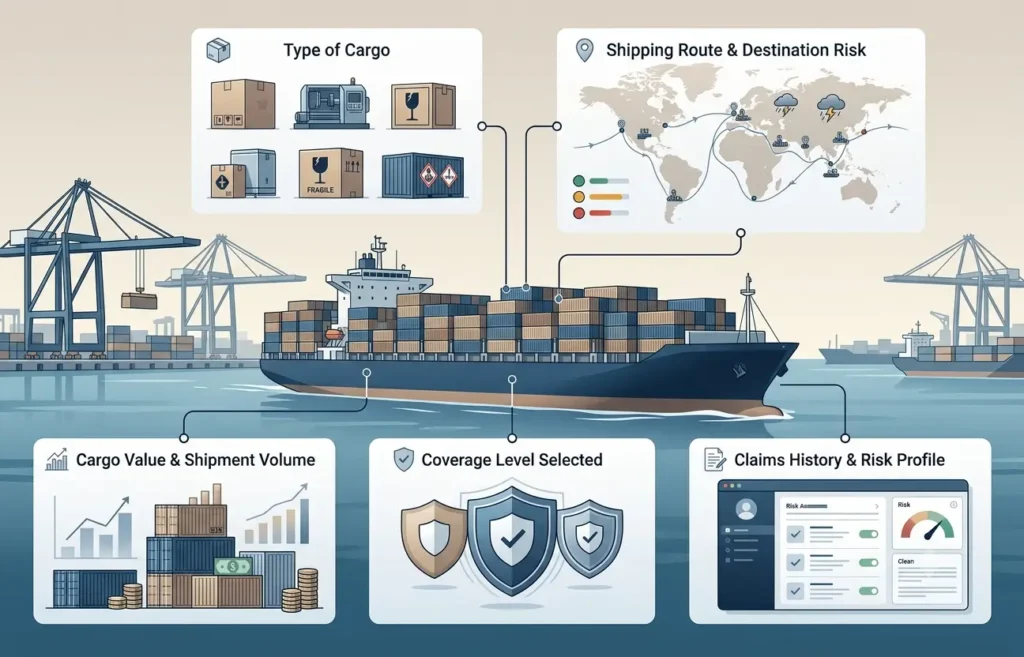
1):- Type of Cargo
The nature of the goods being shipped plays a major role in pricing. Hazardous materials, perishable products, and high-value goods typically carry greater risk than general merchandise and may require specialized coverage.
2):- Shipping Route and Destination Risk
Insurers assess the route your cargo will travel. Factors such as severe weather, piracy risks, political instability, and port congestion can influence marine cargo insurance pricing and affect premium costs.
3):- Cargo Value and Shipment Volume
Higher-value shipments generally require higher coverage limits, which can increase insurance costs. Businesses that ship large volumes regularly may be eligible for customized coverage solutions.
4):- Coverage Level Selected
The type of protection you choose also affects your quote. Basic coverage is generally more affordable, while comprehensive marine cargo insurance coverage options provide broader protection against a wider range of risks.
5):-Claims History and Risk Profile
Businesses with a history of frequent claims may face higher premiums than those with strong risk management practices and fewer past losses.
6):- Quantified Insight
Hazardous cargo shipments can have insurance premiums that are up to 40% higher than standard commercial goods due to the increased risks associated with transportation, handling, and storage.
What Does Marine Cargo Insurance Cover?
Marine cargo insurance coverage can vary depending on the policy, insurer, and shipment requirements. In general, businesses can choose between basic coverage and more comprehensive protection based on the risks associated with their cargo and shipping route.
1):- Basic Coverage
Basic coverage is frequently appropriate for lower-risk goods and provides protection against common transit-related risks.
It typically covers:
- Cargo damage during transit
- Theft or pilferage
- Partial loss of goods
- Accidental damage caused by handling or transportation
While basic coverage provides essential protection, it may exclude certain high-risk events and specialized losses.
2):- Comprehensive Coverage
Comprehensive coverage offers broader protection for businesses shipping valuable or high-risk cargo internationally.
It may cover:
- Natural disasters such as storms and floods
- General Average contributions
- Accidental damage during loading and unloading
- Extended transit-related risks
- Additional risks specified in the policy
Many importers and exporters choose comprehensive coverage to reduce financial exposure across complex international supply chains.
3):- Optional Add-Ons
Businesses can further customize their marine cargo insurance policy with additional coverage options, including:
- Inland transit coverage
- Warehouse-to-warehouse protection
- Delay coverage
- War and strike coverage
These add-ons can provide extra protection for shipments that face unique operational or geographic risks.
How to Get a Marine Cargo Insurance Quote in 6 Simple Steps
Getting a marine cargo insurance quote is a straightforward process when you have the necessary shipment information ready. Following these six steps can help you obtain accurate pricing and choose the right coverage for your cargo.
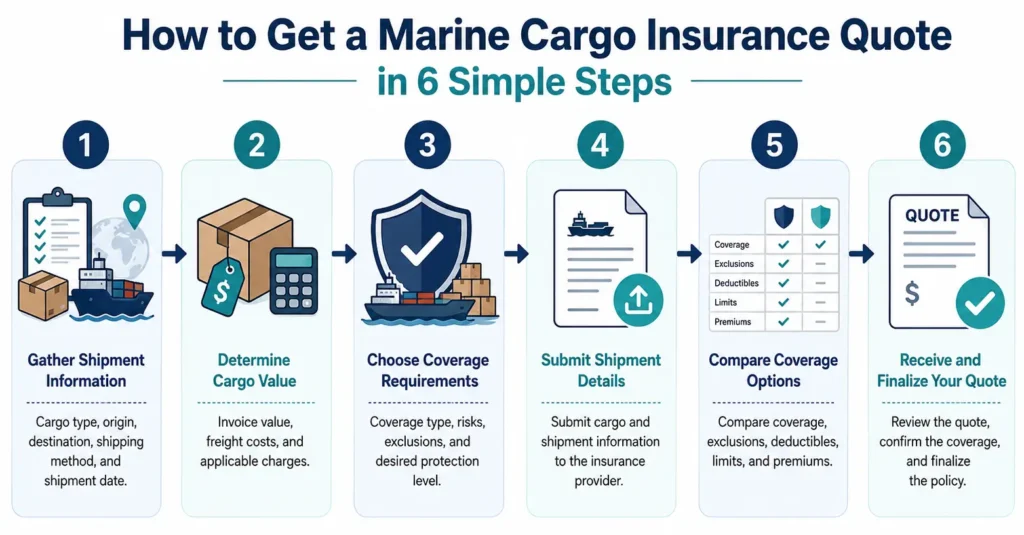
Step 1: Gather Shipment Information
Start by collecting key shipment details, including the type of goods being transported, origin and destination, mode of transport, and expected shipping dates. Accurate information helps insurers assess risk more effectively.
Step 2: Determine Cargo Value
Calculate the total value of the shipment, including the cost of goods, freight charges, and any additional expenses that may need to be insured. Understating cargo value can result in insufficient coverage during a claim.
Step 3: Choose Coverage Requirements
Decide what level of protection your shipment needs. Consider whether basic coverage is sufficient or if comprehensive protection and additional endorsements are necessary based on the cargo and route.
Step 4: Submit Shipment Details
Provide the required information to the insurer or request a marine cargo insurance quote online. The insurer will use the shipment details to evaluate risks and prepare a customized quote.
Step 5: Compare Coverage Options
Review multiple quotes carefully. Don’t focus only on premium costs—compare coverage limits, exclusions, deductibles, and claims support to determine the overall value of each policy.
Step 6: Receive and Finalize Your Quote
Once you’ve selected the most suitable option, review the policy terms and finalize the coverage before the shipment begins transit. This ensures your cargo is protected from the start of its journey.
By following these steps, importers, exporters, and logistics businesses can secure a marine cargo insurance quote that matches their shipping requirements and risk profile.
Scenario-Based Examples: Choosing the Right Marine Cargo Insurance
Real shipment situations can make it easier to understand how a marine cargo insurance quote may differ from one business to another.
Scenario 1: High-Value Electronics Export
A Singapore exporter is shipping $200,000 worth of electronics to India. Because the cargo has a high financial value, the business may need broader coverage and a suitable insured limit.
The exporter should compare the quote based on coverage, exclusions, deductible, and route risks—not just the premium.
Scenario 2: Machinery Import
An importer brings $75,000 of machinery from China to Singapore. The shipment involves multiple stages of transportation, including sea and inland transit.
The importer should check whether the marine cargo insurance policy covers the entire transit or whether additional inland transit protection is required.
Scenario 3: Regular Commercial Shipments
A logistics business ships approximately 50 consignments each month. Requesting individual quotes for every shipment may not be the most practical approach.
Depending on the insurer and business requirements, the company may explore an arrangement designed for regular shipments. This can simplify administration while providing consistent cargo insurance coverage, subject to the policy terms.
These examples show why marine cargo insurance pricing can vary significantly between businesses. Cargo value, risk, route, shipment frequency, and coverage requirements all influence the insurance terms offered.
What Mistakes Should You Avoid When Requesting a Marine Cargo Insurance Quote?
A marine cargo insurance quote is only as reliable as the information used to prepare it. Avoiding a few common mistakes can help you get suitable protection and reduce potential problems during a claim.
1. Underestimating Cargo Value
Do not reduce the declared value simply to obtain a lower premium. If the insured amount is insufficient, your financial recovery may also be limited if a covered loss occurs.
2. Giving Incomplete Shipment Details
Leaving out information about the cargo, route, destination, or transport method can affect the accuracy of the quote. Provide complete and truthful details from the start.
3. Choosing the Cheapest Quote
The lowest premium may not provide the protection your shipment needs. Compare coverage limits, exclusions, deductibles, and conditions alongside the price.
4. Ignoring Route-Specific Risks
A shipment may face different risks depending on its route. Weather, theft, piracy, political conditions, and other transit risks can affect the suitability of your marine cargo insurance coverage.
5. Waiting Until Transit Has Started
Requesting insurance at the last minute can create avoidable problems. Where possible, arrange and confirm coverage before the cargo begins its journey.
6. Not Reading the Policy Terms
A quote is only an estimate. Before accepting it, review the final marine cargo insurance policy, including exclusions, limits, deductibles, claim requirements, and coverage period.
Simple rule: Give accurate shipment information, compare the actual protection offered, and confirm the policy terms before your cargo is in transit.
How Should You Evaluate Marine Cargo Insurance Quotes?
The degree of protection provided by insurance coverage varies. When reviewing a marine cargo insurance quote, it’s important to look beyond the premium and evaluate the overall value of the coverage.
1):- Look Beyond Premium Costs
A lower premium may seem attractive, but it could come with limited coverage or higher deductibles. Compare the protection offered rather than focusing solely on price.
2):- Review Exclusions and Limitations
Every marine cargo insurance policy includes exclusions and coverage limitations. Understanding what is not covered can help you avoid unexpected claim disputes in the future.
3):- Evaluate Claims Support and Response Times
A good insurer should offer a straightforward claims process and timely support. Reviewing claims response times can help you avoid delays when filing a claim.
4):- Consider Insurer Experience in International Shipping
Choose an insurer with experience in international trade and logistics. Their understanding of shipping risks and global transit routes can help ensure more effective cargo protection.
Also Read: How to Get the Best Marine Cargo Insurance Rates in India: Expert Guide


2 Responses