


Introduction
Global trade today moves at lightning speed, and businesses rely on secure, timely shipping to keep supply chains flowing. Yet every shipment—whether by sea, air, or land—faces risks like theft, damage, or unexpected delays that can disrupt operations and cut into profits.
According to Allied Market Research, the global cargo insurance market was valued at $71.4 billion in 2022 and is expected to grow steadily at a CAGR of 4.1% through 2032. This growth highlights the rising awareness of the importance of cargo insurance, as companies seek smarter ways to safeguard shipments and reduce financial exposure.
Cargo insurance coverage acts as a financial safety net. It ensures that when unforeseen incidents occur, businesses don’t have to absorb the full cost of losses. For companies engaged in domestic and international trade, cargo insurance for businesses provides stability, risk protection, and peace of mind in an increasingly complex logistics environment.
In this guide, we’ll break down what is cargo insurance, how it works, and the benefits of cargo insurance, helping you understand why recognizing the importance of cargo insurance is one of the smartest moves for protecting revenue and operating confidently in today’s competitive shipping world.
What Is Cargo Insurance?
Cargo insurance is a specialized policy that protects goods from loss or damage while they’re being transported—whether by sea, air, or land. It acts as a financial safety net, ensuring that if something goes wrong during transit, such as theft, fire, or an accident, your business doesn’t have to absorb the full cost.
Unlike standard carrier liability—which typically covers only a limited portion of damages—cargo insurance coverage offers broader protection. It compensates the cargo owner based on the declared value of the goods, helping recover losses quickly and maintain business continuity.
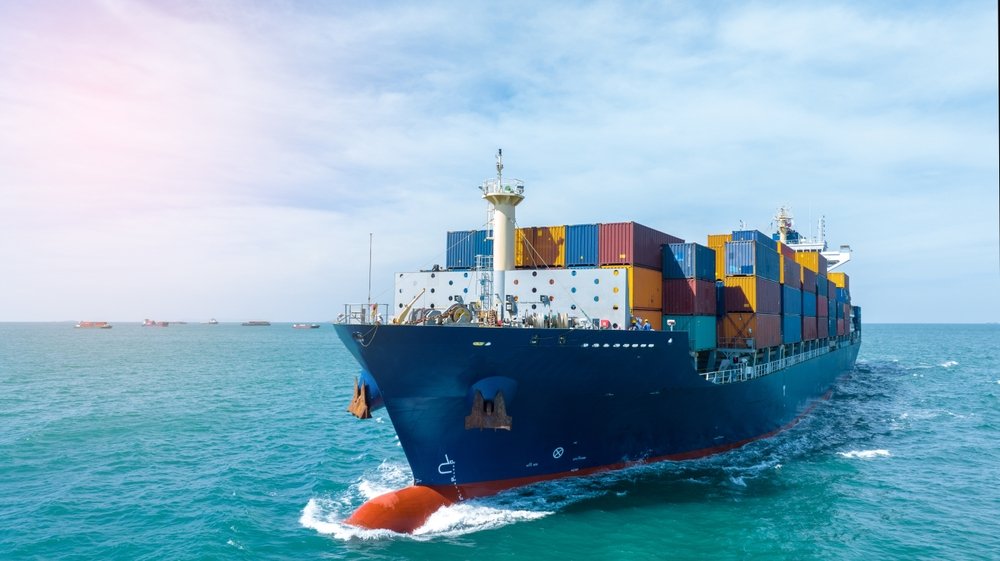
Example: Imagine a shipment of electronics worth ₹10 lakh is damaged during a sea voyage. The shipping carrier might reimburse only a small fraction under their liability terms. But with cargo insurance, the business can claim the full insured value, avoiding a major financial setback.
What Does Cargo Insurance Cover?
Cargo insurance for businesses offers financial protection against a wide range of risks that can occur during the transportation of goods. Whether your shipment moves by sea, air, or land, this coverage ensures you’re not left absorbing losses from unexpected incidents.
Here’s what cargo insurance coverage typically includes:
- Theft or Hijacking: Protects against stolen goods during transit or temporary storage
- Fire or Explosion: Covers losses caused by accidental fires or explosions en route
- Natural Disasters: Safeguards cargo from storms, floods, earthquakes, and other environmental hazards
- Handling and Loading Errors: Covers physical damage from improper loading, unloading, or rough handling
- Collisions or Accidents: Provides compensation for damage due to road, air, or sea accidents
However, most policies also have exclusions. Cargo insurance usually does not cover:
- Damage caused by inadequate packaging or labeling
- Losses due to delays or missed delivery windows
- Damage from inherent defects or natural wear and tear of goods
Example: If your shipment of fragile glassware breaks due to mishandling at the port, your cargo insurance policy may cover the loss. But if the items were poorly packaged before shipping, the insurer could deny the claim.
How Does Cargo Insurance Work?
Cargo insurance acts as a financial safety net for your goods while they’re in transit. If something goes wrong—like damage, theft, or loss—your business can recover without facing major financial setbacks. Here’s how cargo insurance works, step by step:
1. Purchase a Policy You choose a cargo insurance policy based on your shipment’s type, value, and route. The insurer calculates a premium depending on the level of risk involved.
2. Shipment Coverage Begins Once insured, your cargo is protected throughout its journey—whether it’s traveling by sea, air, or land. Coverage includes perils listed in the policy, such as theft, fire, natural disasters, and handling errors.
3. Incident Occurs If your shipment is damaged, lost, or stolen, the incident must be documented immediately. You’ll need evidence like photos, bills of lading, and shipping documents.
4. Filing a Claim You notify the insurer and submit the required documentation. The claim is reviewed based on your policy’s terms, coverage type, and limits.
5. Compensation Is Paid The insurer calculates the payout based on the insured value and coverage details. This payment helps you replace lost goods, recover costs, and keep operations running smoothly.
Example: Let’s say you ship goods worth $100,000 via sea, and your policy includes all-risk coverage. During transit, a storm damages part of the shipment. After reviewing your claim, the insurer pays up to the coverage limit—allowing you to replace the damaged goods without taking a financial hit.
Types of Cargo Insurance
Choosing the right type of cargo insurance for your business depends on how you ship goods, what you’re shipping, and the risks involved. Here are the main types to consider:
1. Marine Cargo Insurance Covers goods transported by sea—and sometimes extended to air shipments. Protects against rough weather, piracy, collisions, and mishandling at ports. Ideal for exporters and importers involved in international ocean freight.
2. Air Cargo Insurance Designed for goods shipped via air. Covers losses from turbulence, theft, handling errors, or delays. Recommended for fragile, high-value, or time-sensitive shipments.
3. Land Transport Insurance Protects goods moved by trucks, trains, or other land vehicles. Covers accidents, theft, collisions, and road-related damage. Essential for domestic shipments and door-to-door delivery services.
Optional Subtypes for Extra Coverage
- All Risk Coverage: Offers broad protection against nearly all types of physical loss or damage
- Named Perils Coverage: Covers only specific risks listed in the policy, such as fire, theft, or natural disasters
- Open Cover: Provides continuous coverage for multiple shipments over a set period—ideal for frequent shippers
By selecting the right type of cargo insurance coverage, businesses can tailor protection to match their shipment method, cargo value, and route—ensuring peace of mind and minimizing financial risk.
Why Cargo Insurance Is Important for Your Business
In today’s global logistics, shipments face numerous risks that can lead to financial loss, operational disruptions, and damaged business reputation. Cargo insurance is essential to safeguard your business against these uncertainties.
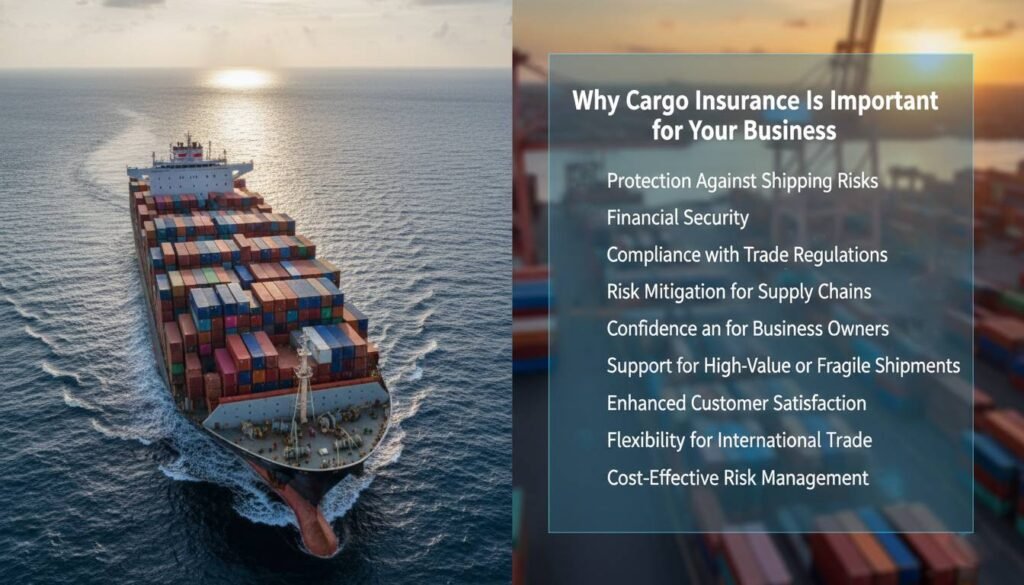
1. Protection Against Shipping Risks
Goods in transit are exposed to unpredictable events like rough seas, road accidents, or storms. Without coverage, businesses must absorb the full cost of these losses, which can severely impact profitability. With cargo insurance for businesses, shipments are protected against these risks, ensuring smoother operations.
2. Financial Security
One of the biggest benefits of cargo insurance is financial protection. Whether it’s a high‑value shipment or everyday goods, insurance provides compensation for damaged or lost cargo. This keeps revenue steady and allows businesses to recover quickly without draining cash flow.
3. Compliance with Trade Regulations
Many countries and shipping agreements require cargo insurance. Securing coverage not only helps businesses meet legal obligations but also avoids fines, penalties, or shipment delays. It shows partners and clients that you are dependable and professional.
4. Risk Mitigation for Supply Chains
Supply chains thrive on consistency. Unexpected losses or delays can halt production and frustrate customers. Cargo insurance helps maintain stability, ensuring goods reach their destination on time and minimizing interruptions in distribution.
5. Confidence and Credibility
Clients and partners trust businesses that proactively safeguard shipments. Having cargo insurance signals responsibility and reliability, strengthening long‑term relationships and enhancing brand reputation.
6. Peace of Mind for Business Owners
Knowing shipments are insured allows business owners and logistics managers to focus on growth strategies instead of worrying about potential losses during transit.
7. Support for High‑Value or Fragile Shipments
Specialized cargo insurance policies can cover delicate, expensive, or time‑sensitive goods. This ensures that critical shipments are protected throughout their journey, no matter the transport mode.
8. Enhanced Customer Satisfaction
Safe and timely deliveries build customer trust. Cargo insurance reduces the risk of delays or losses that could negatively affect client loyalty and satisfaction.
9. Flexibility for International Trade
Global trade involves diverse risks—piracy, political instability, and extreme weather. Cargo insurance for businesses provides coverage across different regions and transport modes, helping companies expand confidently into new markets.
10. Cost‑Effective Risk Management
Compared to the potential financial losses from damaged or stolen goods, cargo insurance is a relatively small investment. It offers substantial protection and long‑term savings, making it one of the smartest decisions in logistics.
5 Key Benefits of Cargo Insurance
Cargo insurance for businesses offers more than just protection—it delivers real advantages that help companies stay resilient and competitive in global trade. Here are five key benefits:
1. Financial Protection Cargo insurance helps minimize losses from damaged, lost, or stolen shipments. Instead of absorbing the full cost, businesses receive compensation based on their policy—keeping cash flow stable and reducing financial stress.
2. Risk Management With cargo insurance in place, companies can manage operational risks more effectively. Even when unexpected events like accidents or natural disasters occur, supply chains can continue running smoothly.
3. Regulatory Compliance Many countries and international shipping agreements require cargo insurance. Having proper coverage ensures compliance with trade regulations—helping you avoid fines, delays, or legal issues.
4. Enhanced Business Credibility Cargo insurance signals professionalism and reliability. Clients and partners are more likely to trust businesses that proactively protect their shipments, strengthening relationships and boosting brand reputation.
5. Operational Stability Unexpected cargo losses can disrupt delivery schedules and halt operations. Cargo insurance helps businesses recover quickly, maintain continuity, and meet customer expectations without major setbacks.
Factors to Consider When Choosing Cargo Insurance
Choosing the right cargo insurance for your business is essential to ensure your shipments are fully protected. Here are the key factors to keep in mind:
1. Type and Value of Cargo
The nature of your goods directly impacts the coverage you need. High-value items, fragile products, or perishables may require specialized policies or higher coverage limits to guarantee full compensation in case of damage or loss.
2. Mode of Transport
Each transport method comes with its own risks:
- Sea: Prone to storms, rough handling, and piracy
- Air: Susceptible to turbulence, theft, and loading errors
- Land: Exposed to road accidents, collisions, and delays
Choose a policy that addresses the specific risks of your chosen transport mode.
3. Destination and Route Risk
Shipping through high-risk areas—such as piracy-prone waters, politically unstable regions, or remote locations—may require additional coverage. Always assess the route before selecting your insurance.
4. Transit Duration
Make sure your policy covers the entire journey. Short-term policies are ideal for one-time shipments, while long-term or annual coverage suits frequent shippers and offers greater convenience.
5. Policy Terms and Insurer Reliability
Always read the fine print. Review exclusions, liability limits, and claim procedures. Work with insurers who specialize in cargo insurance for businesses and have a strong reputation for handling claims efficiently.
6. Optional Coverage Enhancements
Depending on your business needs, you may opt for additional protections like All Risk coverage or Named Perils coverage, providing broader security against unforeseen events. These options enhance the benefits of cargo insurance and tailor protection to your specific shipping requirements.
Also Read: How Much Does Cargo Insurance Cost in 2025? A Complete Guide to Rates, Coverage & Savings


3 Responses